Out in the Cold, Part 4: Union busting
Final part of a twelve-month investigation: records reveal additional organizations party to the takeover of Out of the Cold shelters as the Nova Scotia government played favourites with service providers. Meanwhile, worker paranoia about surveillance by security guards proves true.

This is the fourth and final part of a twelve-month investigation. Read Part 1, Part 2 and Part 3 here or at the Halifax Examiner.
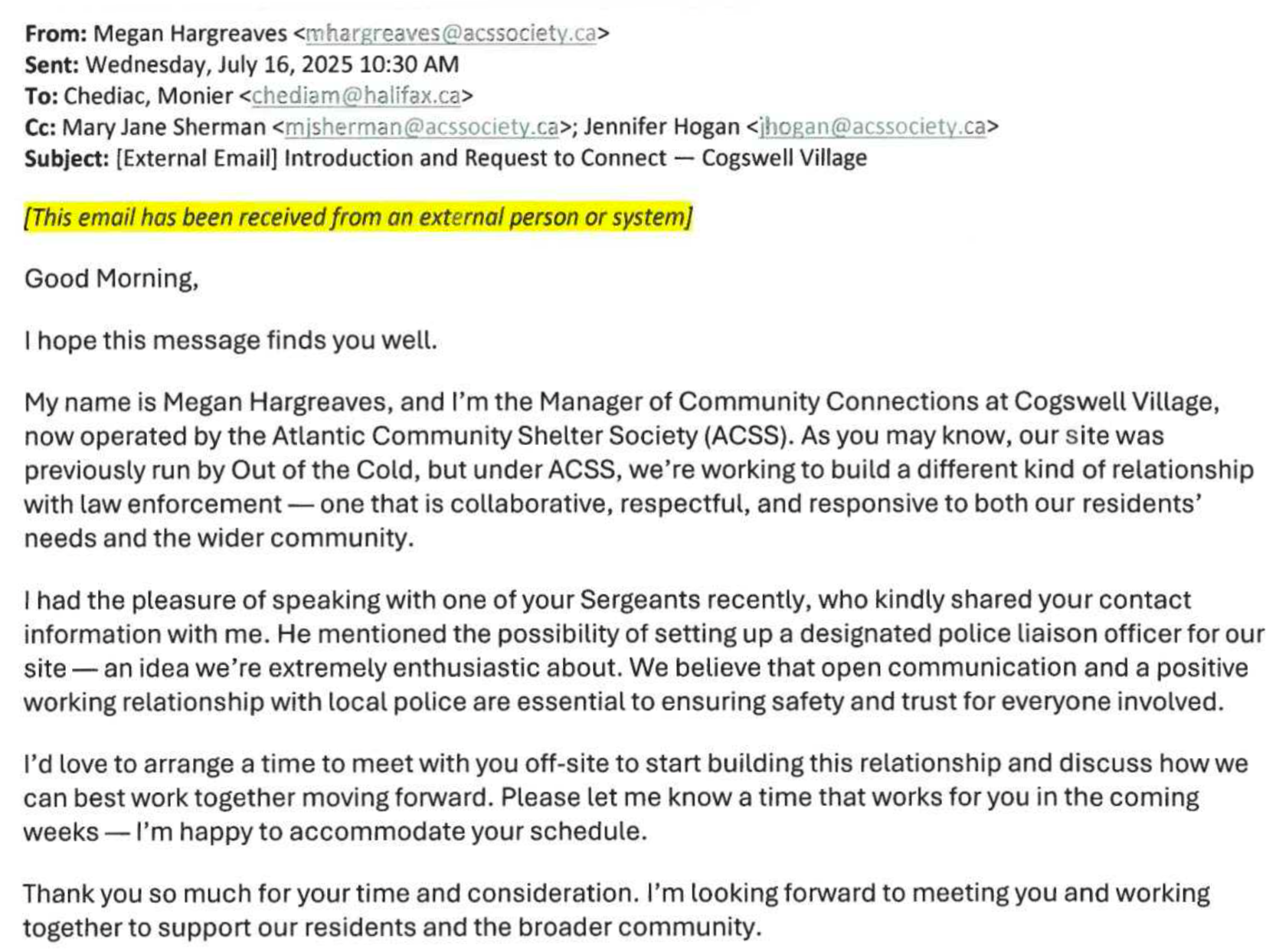
"We're working to build a different kind of relationship with law enforcement," said the Manager of Community Connections at the Atlantic Community Shelters Society (ACSS) in a July 16, 2025 letter to Halifax Police Central Division commander Mo Chediac.
This proposed "collaborative, respectful, and responsive" relationship with police appeared to be a precondition for ACSS to absorb contracts for two low-barrier housing facilities in Dartmouth and Halifax a week earlier. The previous operator, Out of the Cold Community Association, had run afoul of the police and government for protecting resident privacy.
Internally, government officials claimed Out of the Cold staff "obstructed" access to the facilities by police – a claim the government could not substantiate when Drug Data Decoded sought proof in two separate freedom of information requests and direct emails to officials.
Then, over two years, Out of the Cold facilities were secretly surveilled by police and government in the first use of SCAN Act snitch legislation against any nonprofit nationally (but not the only instances).
As this finale of the four-part investigative series will show, surveillance by the provincial government extended beyond the police.
And, in the months while Out of the Cold hurtled unwittingly toward its demise, hushed conversations were ongoing among government officials, their new chosen service provider, and other organizations. Out of the Cold's removal, the records show, was delayed to accommodate ACSS – a politically connected organization inexperienced with high-acuity residents.
Prelude
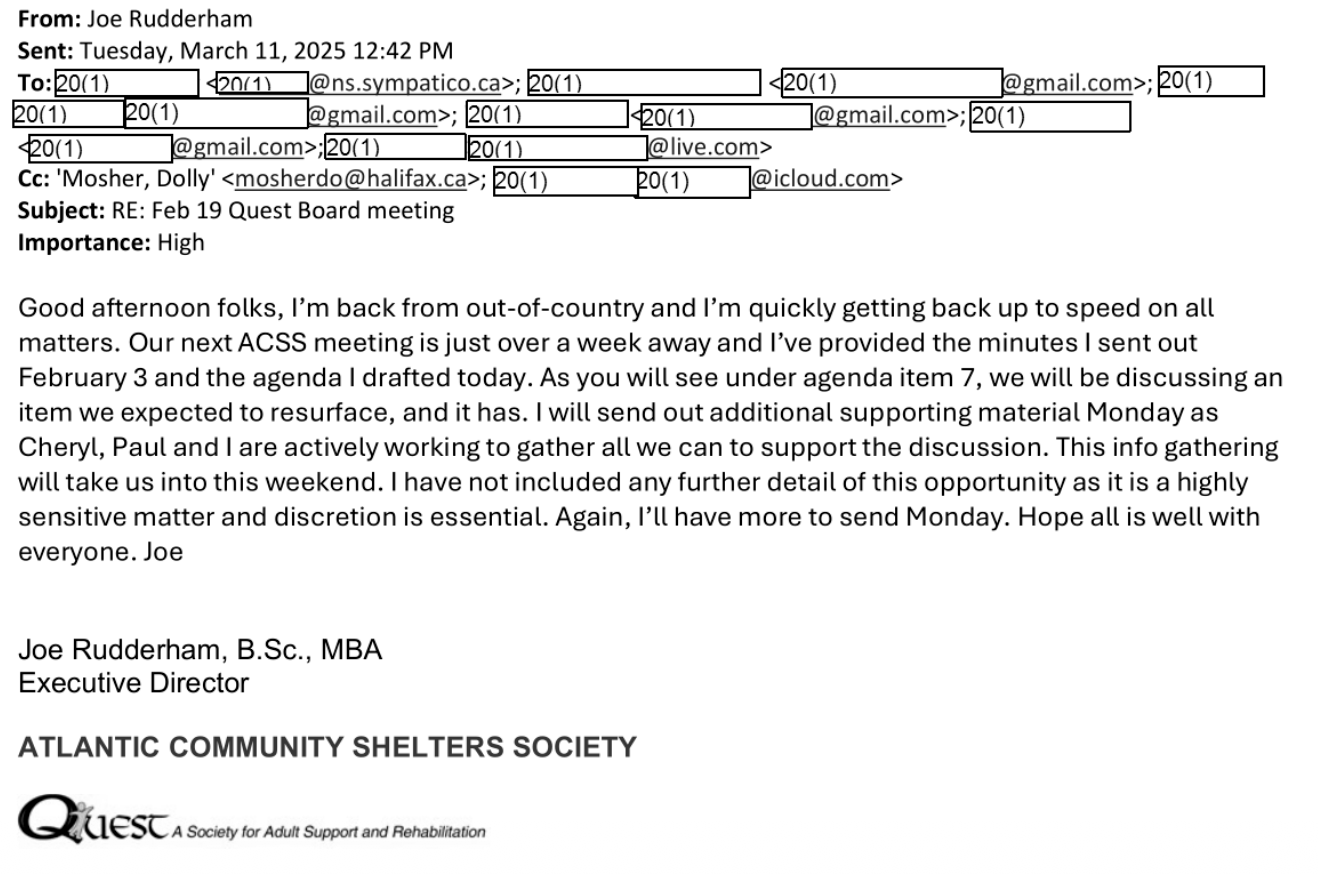
Records obtained by Drug Data Decoded show that ACSS was in conversation with the government about the takeover of the two facilities in 2024, but the transfer was delayed to accommodate ACSS capacity. "As you will see under agenda item 7," wrote ACSS executive director Joe Rudderham to his board of directors on March 11, 2025, "we will be discussing an item we expected to resurface, and it has... I have not included any further detail of this opportunity as it is a highly sensitive matter and discretion is essential."
A week later, Department of Opportunities and Social Development (DOSD) officials joined a Quest Society board meeting that appeared to put the 'opportunity' in motion. Quest shares a board of directors and executive director with ACSS, and in its first operating year, ACSS sent over one million dollars cash to Quest while receiving at least seven million in provincial funding.
This manoeuvring led to the creation of a 'Transition Guiding Framework' drafted on March 27, 2025 trumpeting core values of the project that included to "treat people with dignity, respect and without discrimination," "preserving rights and privacy of residence and staff," and "prioritizing the safety and wellbeing of residents, staff and the community."
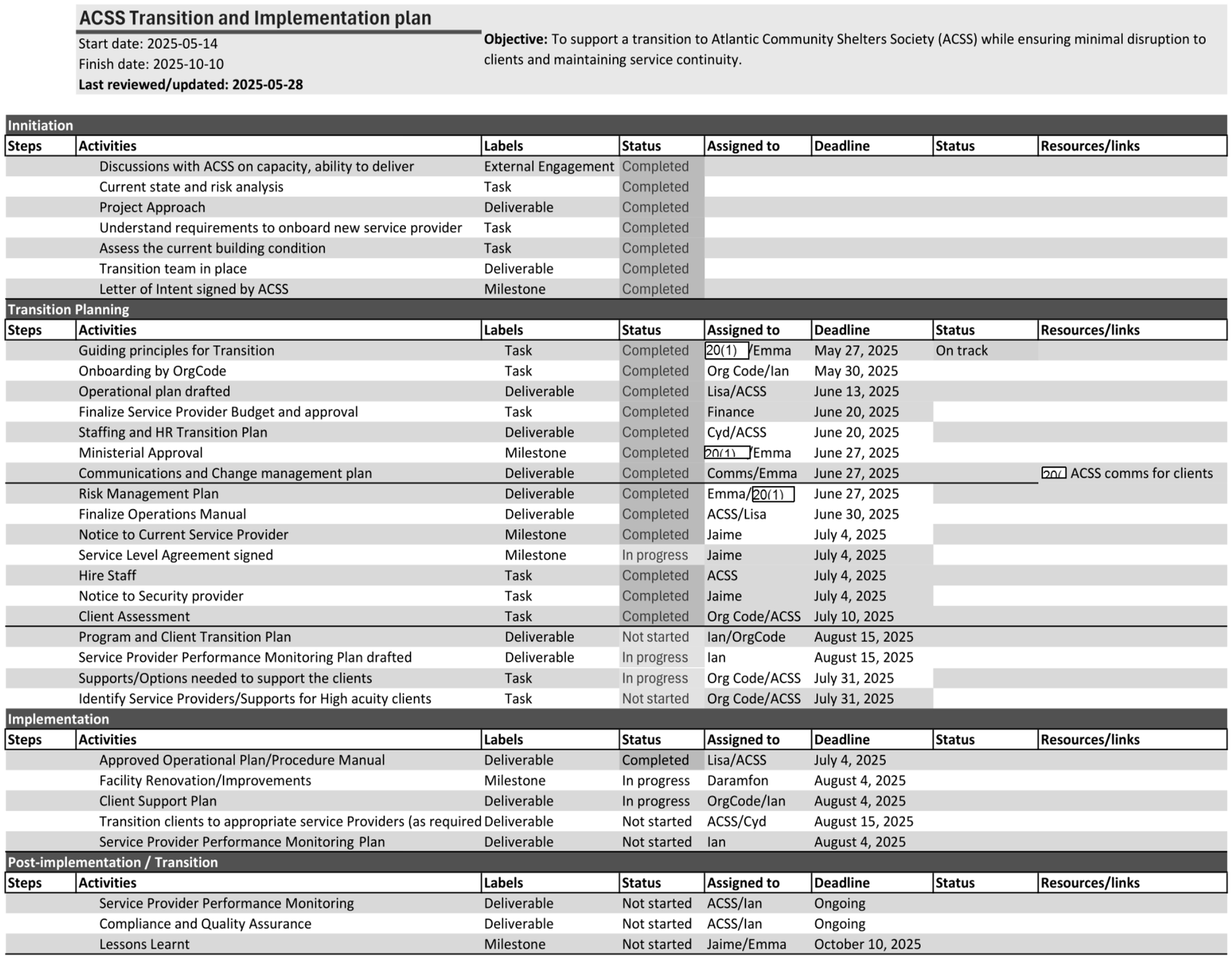
This was followed in May by a delineated timeline of actions ahead of the takeover by specified individuals in government, ACSS and a company called OrgCode.
OrgCode is a consultancy with a mission to "help communities and organizations make homelessness rare, brief and non-recurring." According to Out of the Cold staff, OrgCode was onsite during the facility takeovers on July 8, 2025.
On July 14, OrgCode leadership was asked by email how they secured this contract, how much they were paid, whether DOSD provided them with information about Out of the Cold or ACSS before entering the agreement, whether they had a preexisting relationship with ACSS, and whether anything seemed amiss during the day that Out of the Cold staff were evicted. They did not respond.
Like several contracts detailed in Part 3, OrgCode does not appear in a search of Nova Scotia's public procurement portal. From 2018 to 2020, the company secured $113,505 in federal sole-source contracts.
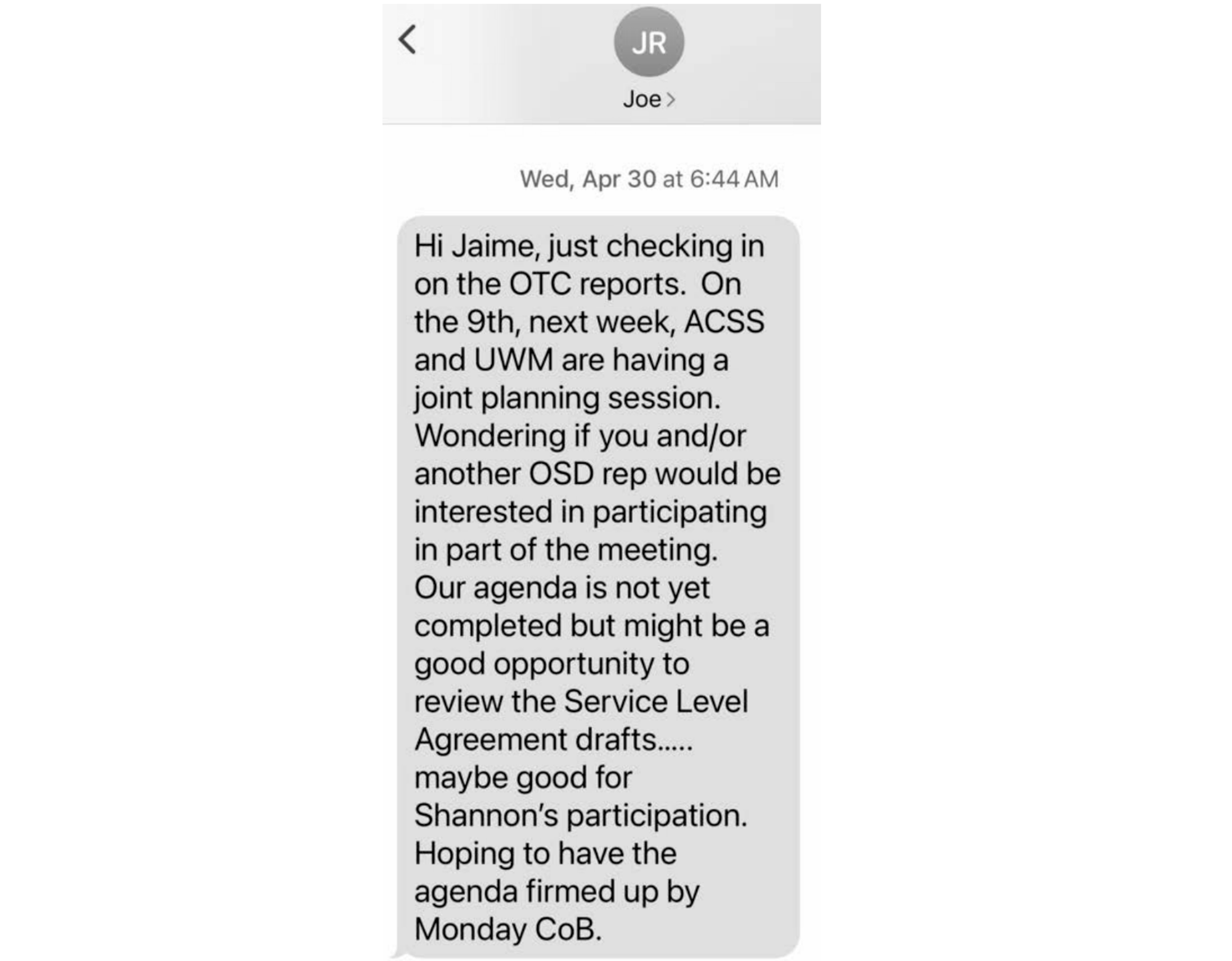
Another organization was also involved around this time. On April 30, 2025, Rudderham invited DOSD official Jaime Smith to a 'joint planning session' between ACSS and 'UWM' – presumably, United Way Maritimes. This record was returned as part of a request for records concerning Out of the Cold.
United Way Maritimes was asked on July 14 about its involvement in the takeover by ACSS, whether United Way had anything to gain from it, and why United Way selected ACSS as service provider for its tiny-home village in Lower Sackville when ACSS had only incorporated one month previous. United Way did not respond.
A search of the public procurement portal did not turn up any contracts issued to United Way, and there is no current indication that the organization received contracts from this service provider transition.
By April 2025, Rudderham and government officials were discussing the particulars of the repairs needed at the two facilities. "We are hopeful to reach an agreement to proceed by the end of next week," he told them. ACSS board chair Dolly Mosher's Halifax Regional Police email address was copied in the correspondence.
Documents obtained from Halifax police show that agreement involved the “complete remediation and renovation of the Halifax and Dartmouth Out of the Cold modular shelter sites." The government assured ACSS that "staff are currently seeking quotes and estimates from vendors... Many of the identified issues are typical of aging modular units that were not originally intended for long-term shelter use.” These included lack of acoustic insulation, room temperatures reaching high enough to pose "a health and safety risk," and water damage to bathroom floors caused by "frequent toilet overflows."
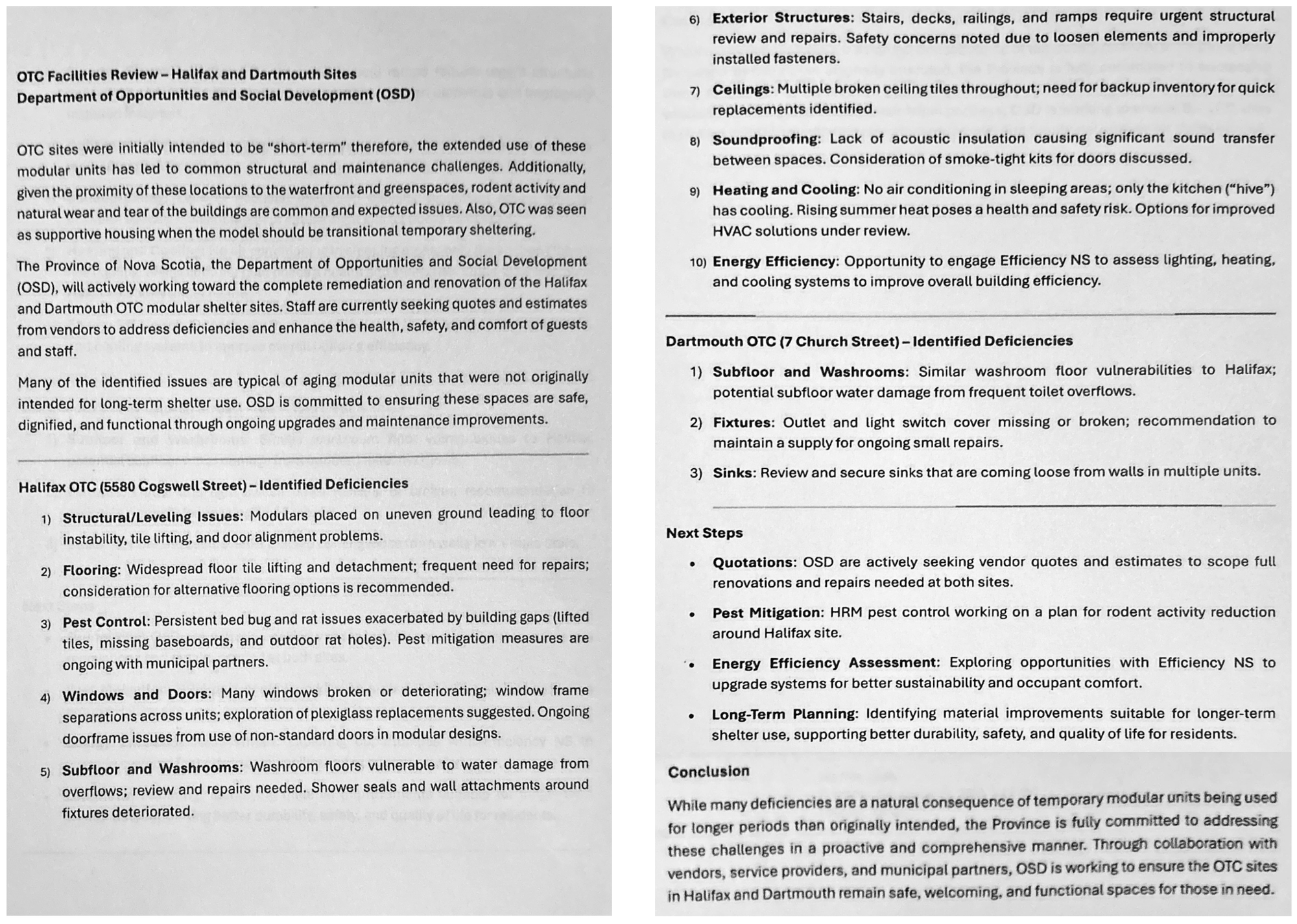
Communications between Out of the Cold and the government show that security at the site was a recurring issue: "As previously discussed on a number of occasions with [Department of Community Services]," wrote Out of the Cold's board of directors on August 25, 2023, "we feel that physical enhancements and/or changes to the physical layout of the space that would allow OTC better control over access to the space and are integral to the program's success..."
Carlo Cininni, a former Out of the Cold worker introduced in Part 2 of this series, highlights this problem. "The buildings were five pods in a parking lot – incredibly porous to foot traffic," he says. "And outsiders were always the problem. We used to have a guest policy and when we cut the guest policy, things calmed down so much…. On the inside, we could navigate personal dynamics and we had ways of creating boundaries.”
Records show that no-visitor rule was imposed by the government, forcing Out of the Cold to stop doing drop-in care for non-residents in August 2023. The organization’s response at the time indicates it was a major shock.
Some residents, says Austin Hiltz, another former Out of the Cold worker introduced in Part 3, seemed to appreciate the new setup. However, “it made building relationships and finding people who met the mandate for intake much more difficult.”
This obstacle would have serious consequences for the organization’s financial footing when the government twice turned the occupancy shortfall into a failure by the organization to "go to full capacity."
In its August 2023 letter, the leadership of Out of the Cold urged the government to reconsider its no-visitor rule, stating that it would eliminate support for the local unhoused population and that Out of the Cold's residents felt guests were essential to their mental health. Out of the Cold warned that its drop-in services were "of a crisis nature and are related to safety... [Halting] support to drop-ins will deeply impact our staff and has the very real potential to compound stress, moral injury and trauma that so many frontline staff already struggle with."
Nonetheless, the government continued to blame Out of the Cold for falling short on bed occupancy, while declining to fund a security fence or gate.
Among the upgrades offered to ACSS during its May 2025 negotiations: a full security fence and gate.
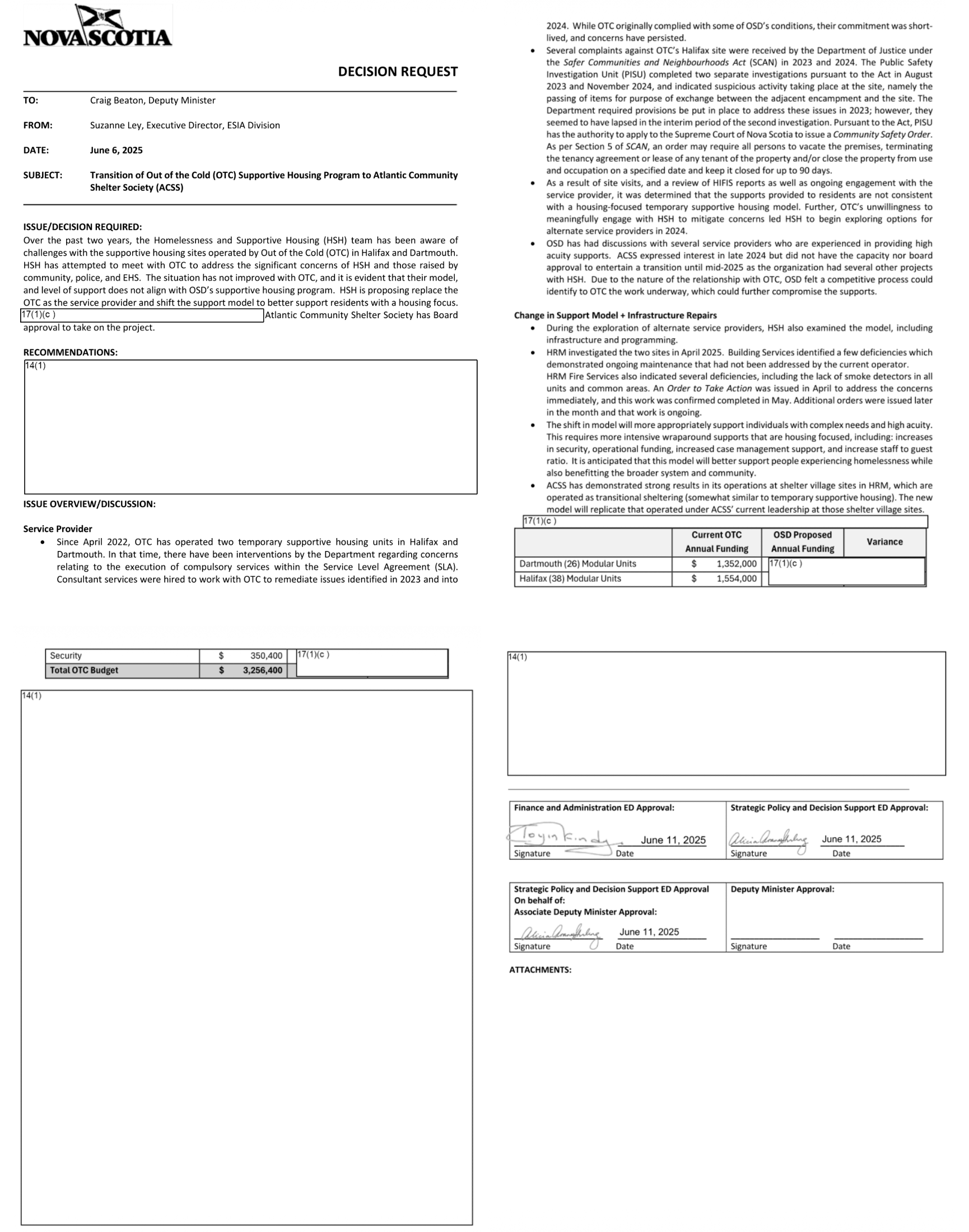
It was not until June 6, 2025 – one month before Out of the Cold was hastily replaced with ACSS – that a 'Decision Request' letter was sent by DOSD senior official Suzanne Ley to deputy minister Craig Beaton to explain the rationale.
After stating that DOSD "had discussions with several service providers who are experienced in providing high acuity supports," Ley explained that "ACSS expressed interest in late 2024 but did not have the capacity nor board approval to entertain a transition until mid-2025."
Ley did not name these 'several' providers or explain what ended those discussions, but revealed the reason why the selection of ACSS was sole-sourced: "a competitive process could identify to Out of the Cold the work underway, which could further compromise the supports."
Ley also claimed in the letter that "several complaints against OTC's Halifax site were received" under the SCAN Act, but freedom of information requests by Drug Data Decoded revealed that only one complaint was documented for each SCAN investigation. Ley summarized those investigations' findings as "suspicious activity taking place at the site, namely the passing of items for purpose of exchange between the adjacent encampment and the site."
Although DOSD redacted facility budget details in these documents, Drug Data Decoded obtained them in a separate request, as previously reported. That showed Out of the Cold's budget was upgraded by 72 percent for ACSS, an increase of more than $2 million per year. This does not account for renovations and structural upgrades that included the security gate and fence Out of the Cold's board had urgently requested since 2023.
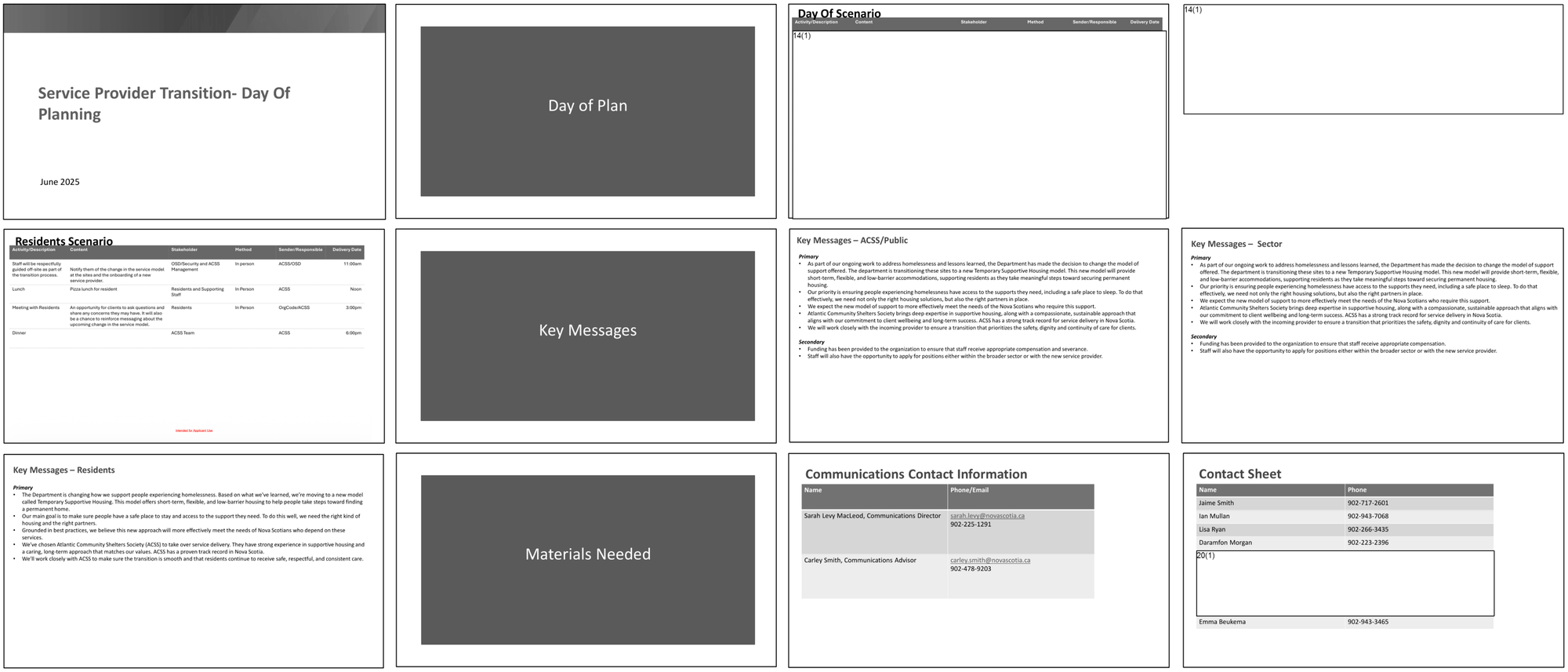
As the removal of Out of the Cold drew nearer, a Transition Day Plan was circulated among the DOSD and ACSS representatives. This contained a series of slides showing 'scenarios' for the day of the transition and for facility residents, key contacts, and messaging for different audiences including 'public/ACSS,' 'sector' (presumably nonprofit sector), and facility residents.
It did not contain any messaging for the forty-two Out of the Cold workers about to lose their jobs.
Transition Day
"I wasn't on site that day," Carlo told Drug Data Decoded about the July 8, 2025 eviction. "I had worked the night shift and I woke up to a call. I went to meet everybody at a cafe. They had all just been marched off within half an hour."
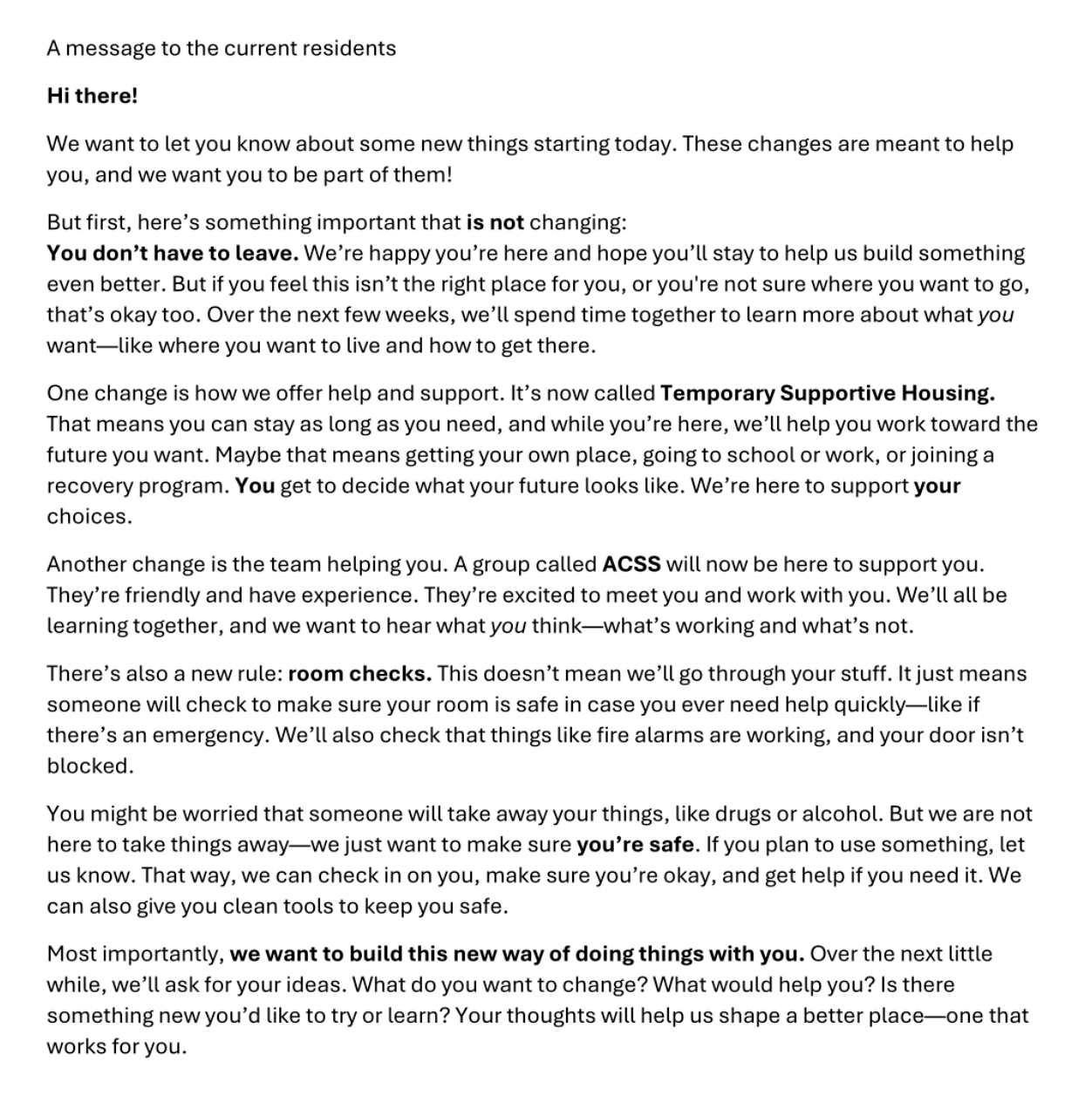
As the employees scrambled to respond, ACSS and DOSD unfurled their detailed transition plan. A letter was prepared for residents summarizing the key messages, including that the site was transitioning to a "Temporary Supportive Housing" model, seemingly suggesting long-term support would be phased out, and that 'room checks' would become standard practice. "These changes are meant to help you," stated the letter, before a line in bold font emphasizing, "You don't have to leave."
The transition plan, however, made multiple references to transitioning clients to “appropriate service providers” better able to handle “high acuity clients.”
On July 14, DOSD was asked if resident turnover increased after the transition. Update, July 17, 10 AM: DOSD claims no increase in resident turnover occurred following the transition.
On the Friday before the eviction, DOSD set up a Transition Team text message group with ACSS leadership. As the eviction notice was being served on Out of the Cold, a redacted discussion about security "set up for each site" was initiated by Paul Rudderham, operations manager at ACSS. As the Transition Plan (shown above) shows the previous security agency being 'given notice,' this is likely referring to the parallel replacement of security companies.
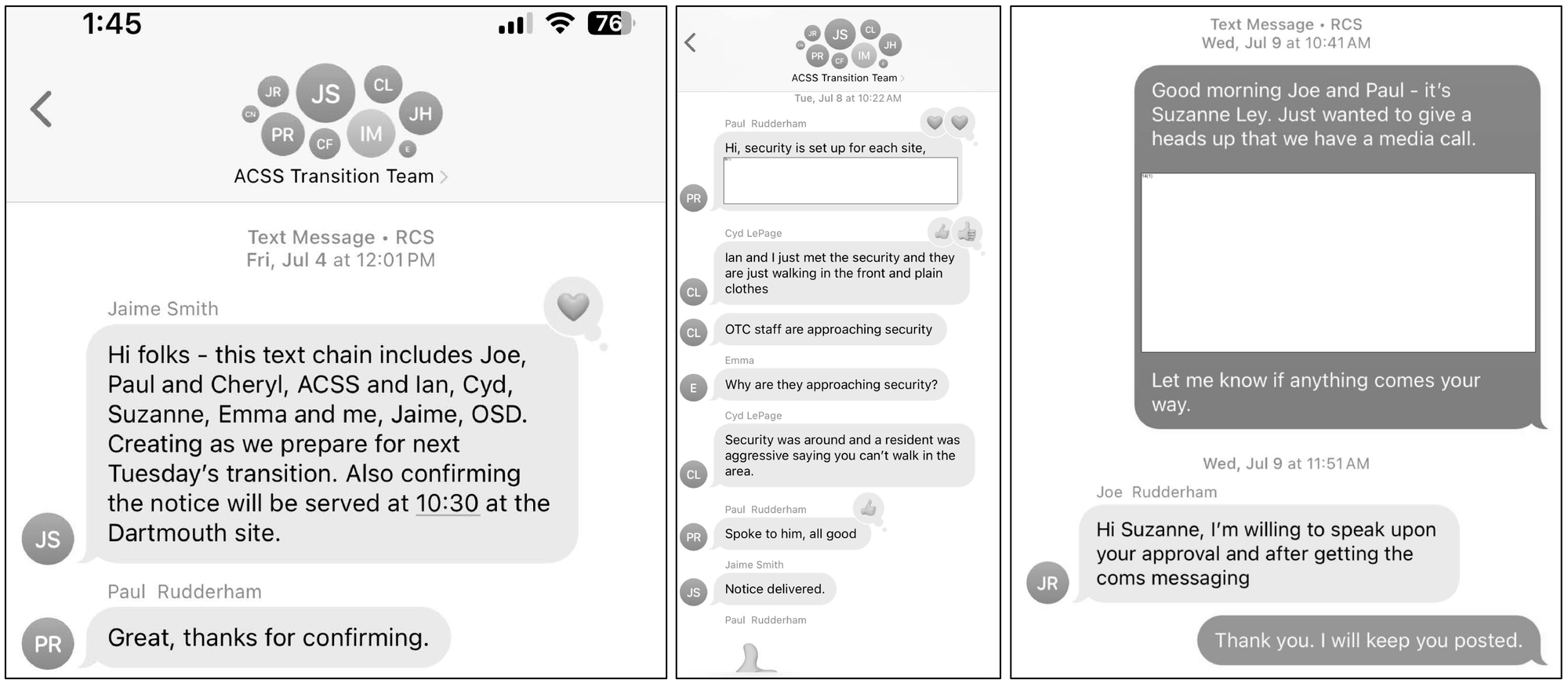
But, as a former employee and the Out of the Cold leadership saw it, problems with the security detail on the sites ran deeper than an agency substitution could solve.
Surveillance from inside
"I felt like I was being surveilled the entire time that I was there," Lynn LaCroix told Drug Data Decoded. "And I was never quite sure if it was because of this sort of institutional shelter environment, or if it was because of something else that was going on. There were lots of issues with police and security guards."
Lynn spent five months as a support worker at Out of the Cold from November 2023 to March 2024 – in the period between the two secret video surveillance operations by the government and police. They worked at the Dartmouth site, where they and the residents would routinely feel and observe a police presence in the area.
Lynn would have a sense for such things. They grew up on the west coast, where "we just were absolutely terrorized by police... some of the stuff was pretty bad." Lynn implies abusive activity by police officers against their youth friend group. Throughout their teens, Lynn says, "we were rounded up and chased around quite a lot... an ongoing program of harassment."
At a young age, Lynn left home and worked on Vancouver's Downtown Eastside. They began focusing on harm-reduction work as a peer and later went back to school to become a community-based researcher.
But Lynn's sixth sense for police never left. And, they say, at Out of the Cold, policing shaped the atmosphere. "I think that a lot of people made choices about things and acted in the way they did because they were being surveilled. I know that the management were telling staff to do certain things in certain ways, because they were worried about police."
Lynn remembers one incident where a police officer called, asking detailed information about the facility. "I thought he was looking for shelter support services and then he sort of said afterwards, 'Oh, I'm officer so-and-so.' He asked me for my name." Other times, police and security "would just come and knock on the door of our staff modular. And," Lynn says, "they always seemed to want to come inside."
Lynn recalls the security guards contracted by DOSD contributing to the sense of being watched. "They patrolled the perimeter. They were rude. They were sort of entitled, coming up to the [housing units] and walking around where they weren't supposed to. The residents hated them. I didn't like them either – they knew me as staff [but] they would still interrogate me every time I went to work, as though I wasn't. And I do think that they were [surveilling us] because... they share databases and networks with police, right?"
Once again, Lynn's sense was correct. The company managing security while they were employed at Out of the Cold was sending 'incident reports' detailing onsite events and actions taken by the Out of the Cold staff directly to the government.
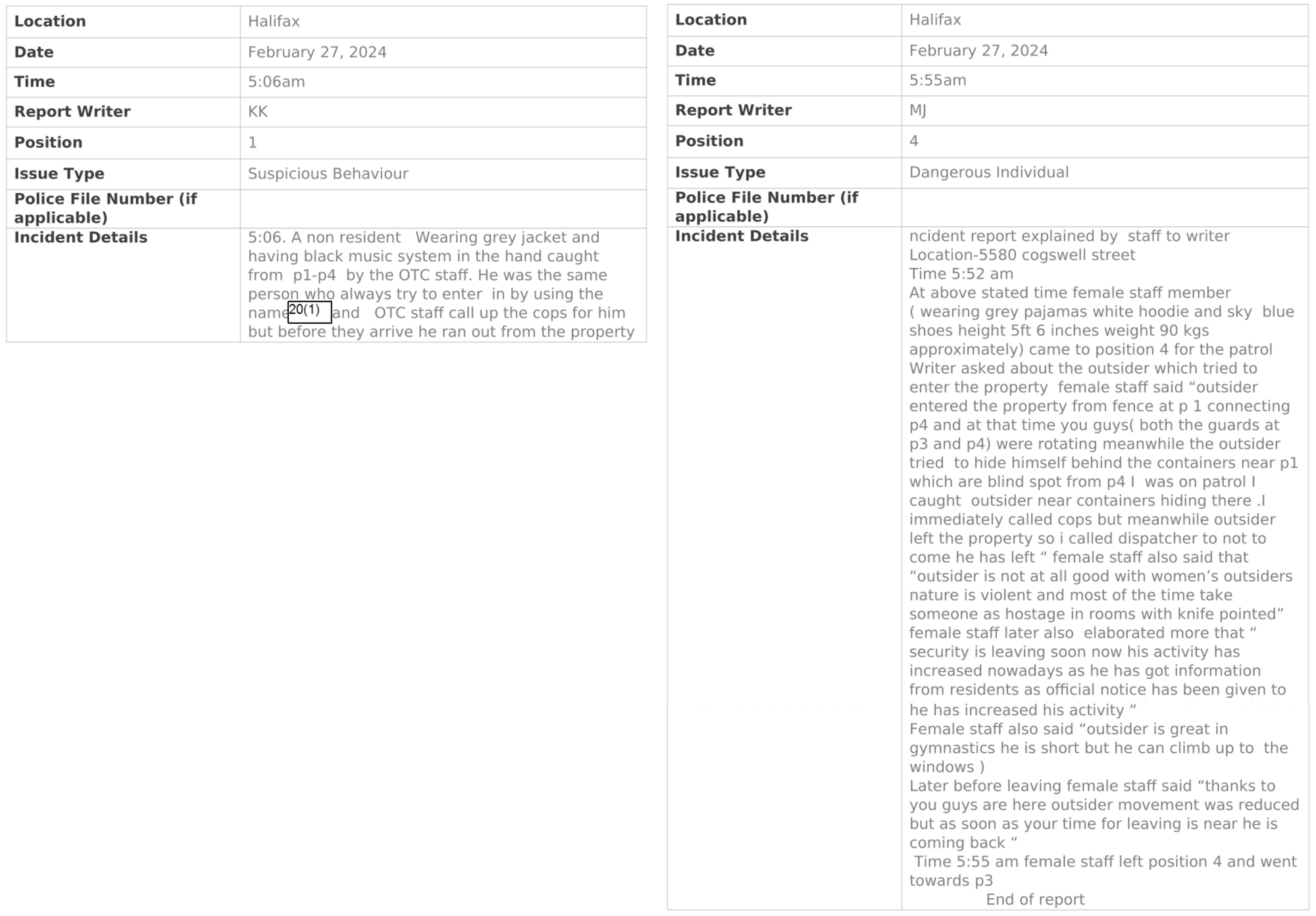
On July 13, the security company was asked to explain the purpose of the Incident Reports, which government officials asked for them, and whether it ever reported non-criminal activities concerning staff or residents. The company did not respond.
Out of Cold had issues with the previous security agency DOSD had put in place, too. In its August 2023 letter to the government, Out of the Cold was emphatic that it no longer wanted to work with the agency DOSD had put in place, "due to a history of negative interactions with clients." Out of the Cold reiterated that it "will require security support to be successful due to the layout of our sites and the volume of people trying to access."
But when Out of the Cold asked to "start working with Titan Security, the contracted security company," DOSD apparently chose to install the company that supplied the 'incident reports.'
Aftermath
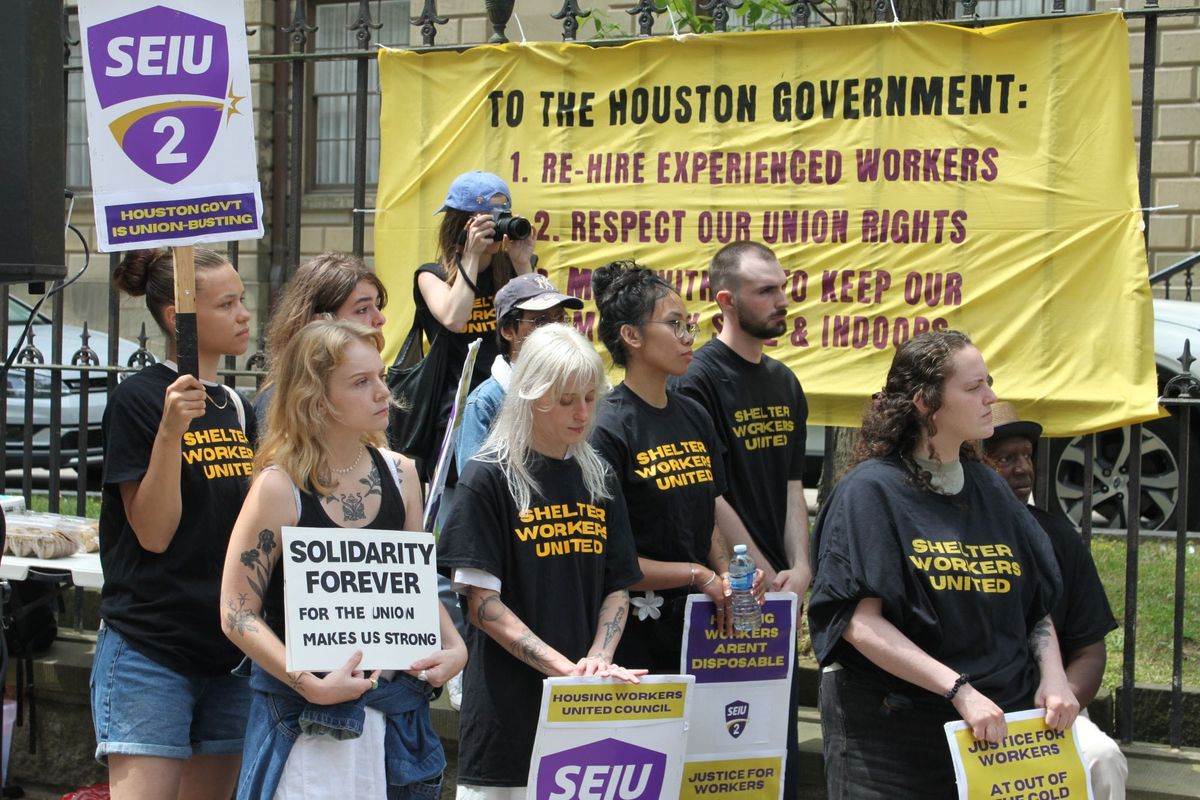
In a June 16, 2025 text message, ACSS executive director Joe Rudderham told a provincial official that he had "learned over the weekend that Out of the Cold is unionized (SEIU Local 2) and the starting wage is $23.50." He then mused about whether Out of the Cold staff would have any right to positions after the 'transfer.'
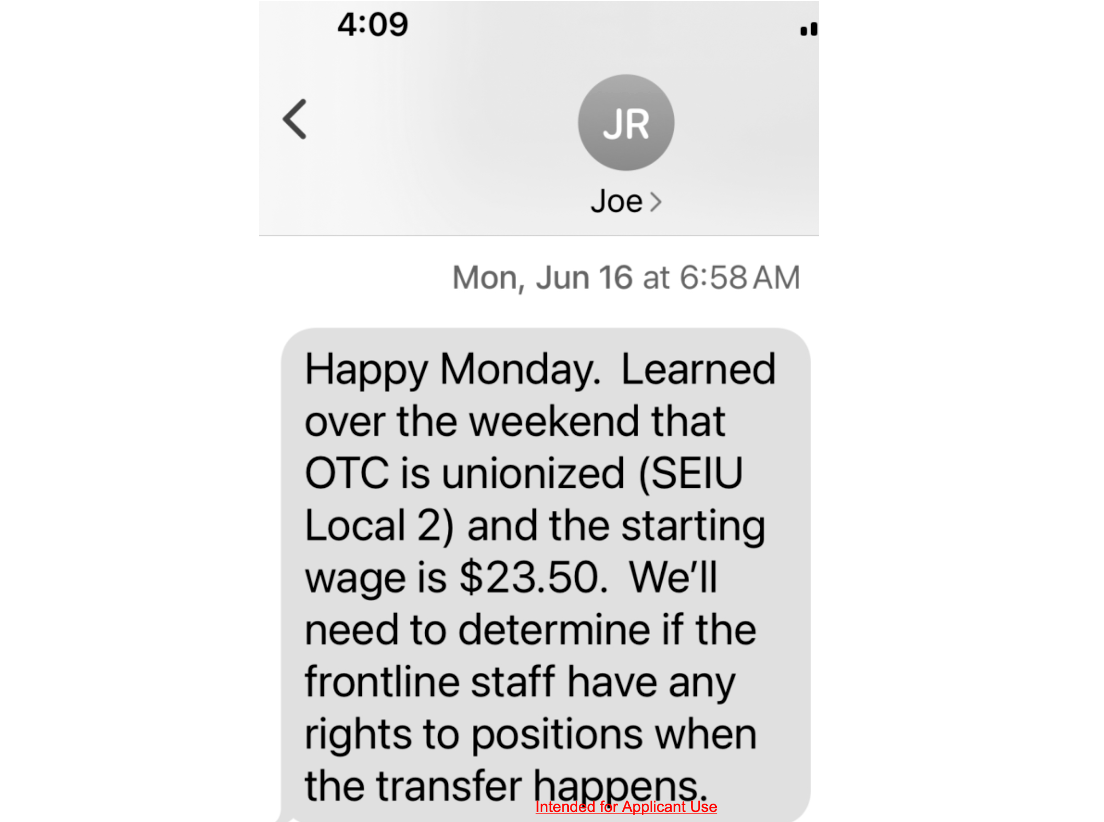
The obtained documents do not show any follow-up to this conversation, but it appears to have been quietly resolved. In its key messages to the public, DOSD included a note that “funding has been provided to the organization to ensure that staff receive appropriate compensation and severance. Staff will also have the opportunity to apply for positions either within the broader sector or with the new service provider."
“After we were all laid off," says Carlo, "ACSS said in the media that they were ‘open to have our applications in’ at a dollar-sixty less per hour. It’s just so spineless, so disrespectful to go to the public and say, ‘well, if they want to work again, they can apply to this job. It's a dollar less an hour.' It's insulting to take a demotion, but even worse to go in to this non-unionized workforce and become a scab."
Tina Oh, the Service Employees' International Union (SEIU) Local 2 vice-president, told Drug Data Decoded that "DOSD and ACSS never formally approached SEIU about employment." In January, the Nova Scotia Labour Board dismissed the SEIU's motion to have unionized Out of the Cold employees re-hired into their former positions, on the grounds that the resident population, physical infrastructure, policies and systems that ACSS inherited from Out of the Cold did not comprise a sufficient "component of a functional economic vehicle" that would trigger successorship obligations.
Ironically, the CEO of OrgCode, the company contracted by the provincial government to facilitate the takeover by ACSS, published an article in March titled "Passion Doesn't Pay the Rent: How low wages and high turnover quietly undermine progress on homelessness."
Looking back, says Carlo, "it's just like, ‘well, there's more union busting.’ We're an example. [The government] doesn't care about our union. They don't care about the residents." He emphasizes the power that management gained in this transition over the incoming workers. "It’s precarious work, they're not unionized, and they're going to be easier to manage from above," he explains.
Steph Mullin, the former Out of the Cold worker introduced in Part 1 of the series, says she wouldn't have applied to work at ACSS, either. "It was so hard to find anything out about ACSS," she recalls. "I didn't really have a lot of faith or comfort in working for a company that was not transparent about the process and disingenuous about how they were going to take over."
A year on from the eviction, this harm to Steph, Carlo, Austin, and their 39 coworkers is unresolved. Many have moved on to new work, but the sense of having been wronged – and then raked over the coals in the media – persists with each former Out of the Cold worker with whom Drug Data Decoded spoke.
While most news reporting at the time included the union's perspective, it also printed government claims as fact without examination. "The way that we were treated by the media after too kind of [made it look] like a horror show," says Carlo. "They took the worst room possible and [showed] these are the conditions that these people live in, without any context of what it's like to work with people who use drugs [or] hoard. Do you know how quick a room can get to looking like that? ... We didn't have the staff to keep up."
Those reports have now stood for a year with no fact-checking or new information. In October, the same CBC reporter who covered Out of the Cold’s removal as news wrote an opinion piece titled "Solving homelessness takes more than just roofs over heads," offering veiled justifications for the government's manoeuvring.
As one example, the piece stated: "Charcy Marchand, director of public safety and policing, said investigators found the site to be a haven for drug trafficking after two extended surveillance operations."
This is false and hyperbolic. As the present series has detailed from multiple government sources, the investigations failed to produce clear evidence of drug trafficking on or near Out of the Cold property, and this was not for lack of trying. In the Minister's October 2023 briefing note, DOSD officials sidestepped the claim, instead choosing to describe the findings as "suspected drug trafficking/sale" while detailing drug consumption outside of the property.
For its allegations, DOSD also leaned on a single 2023 'whistleblower' complaint from an apparent former staff member at Out of the Cold. Some of these were demonstrated false in this investigative series. As a result, the anonymous complaint was not considered credible for further analysis.
On June 3, Drug Data Decoded asked the government and Halifax police directly to substantiate the trafficking allegation, but they declined to respond.
Three DOSD figures implicated in the government activities were quoted in the CBC opinion piece, which did not quote any active Out of the Cold members. Its key expert was Dr. Julian Somers, a vocal proponent of the Alberta government's abstinence-first ideology. In 2022, Somers was contracted to support the Alberta government's effort to dismantle prescribing to people at risk of unregulated drug toxicity. Last December, Somers published a piece in the National Post supporting the Drug User Liberation Front compassion club trafficking convictions, which they are currently challenging.
Because ACSS, Halifax police and the provincial government have refused comment on the circumstances newly revealed about Out of the Cold's removal, further answers will demand additional excavation via freedom of information.
Despite the institutional silence, recent reporting shows a new executive director is in place with ACSS. It is unclear if Joe Rudderham remains affiliated with ACSS or Quest Society. ACSS, Quest and DOSD did not respond when asked on July 14.
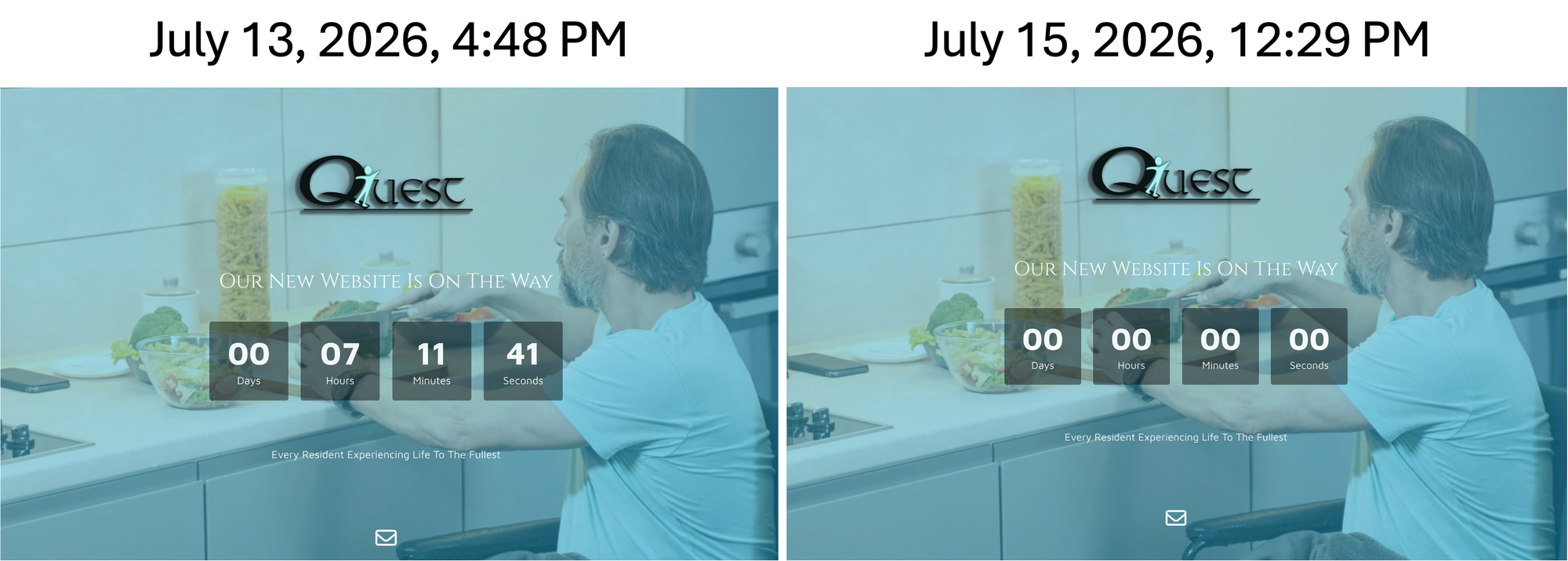
Meanwhile, the ACSS and Quest websites remain blank. Given the roughly $20 million in annual funding these organizations carry, Drug Data Decoded will continue to report as new findings emerge.
Freedom of information documents used in this investigative series are available here.
An early version of this story was shared with Paid subscribers on July 16.
Thanks to 125 Paid subscribers for making this work possible.
Drug Data Decoded provides analysis using news sources, publicly available data sets and freedom of information submissions, from which the author draws reasonable opinions. The author is not a journalist.
This content is not available for AI training. All rights reserved.