Out in the Cold, Part 3: Atlantic Community Shelters Society handed $12.9 million by Province in its first year
Upon taking control of the former Out of the Cold shelters, Atlantic Community Shelters Society got a 72% bump in provincial funding to the facilities. The agency had so much surplus cash in its first year, it transferred more than $1 million to its sister agency, Quest Society.

This is Part 3 of of a series. Part 1 and Part 2 detail how the Nova Scotia government and Halifax police helped coordinate the removal of Out of the Cold.
"The provincial government funded Out of the Cold as permanent space for good public relations, then underfunded it until it couldn’t operate," Austin Hiltz told Drug Data Decoded. To the former residential support worker at the low-barrier shelter in Halifax, "it always felt like the government was waiting for [Out of the Cold] to fail."
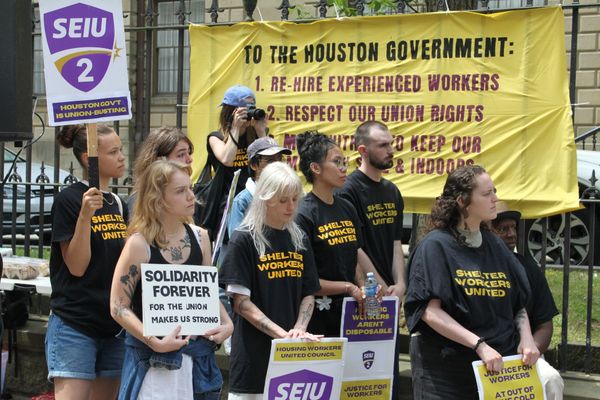
Austin suffers from depression, and when he was laid off along with 41 other unionized employees in July 2025, he fell into a funk. He had worked there since 2022, and now the Nova Scotia government was telling him through an unceremonious eviction that his work was not valued.
“It’s such a social job," he says. "The emotional impact of losing it so suddenly – we had been doing important work, and it felt like I was missing a limb for months."
"It caused an injury. It was a wound.”
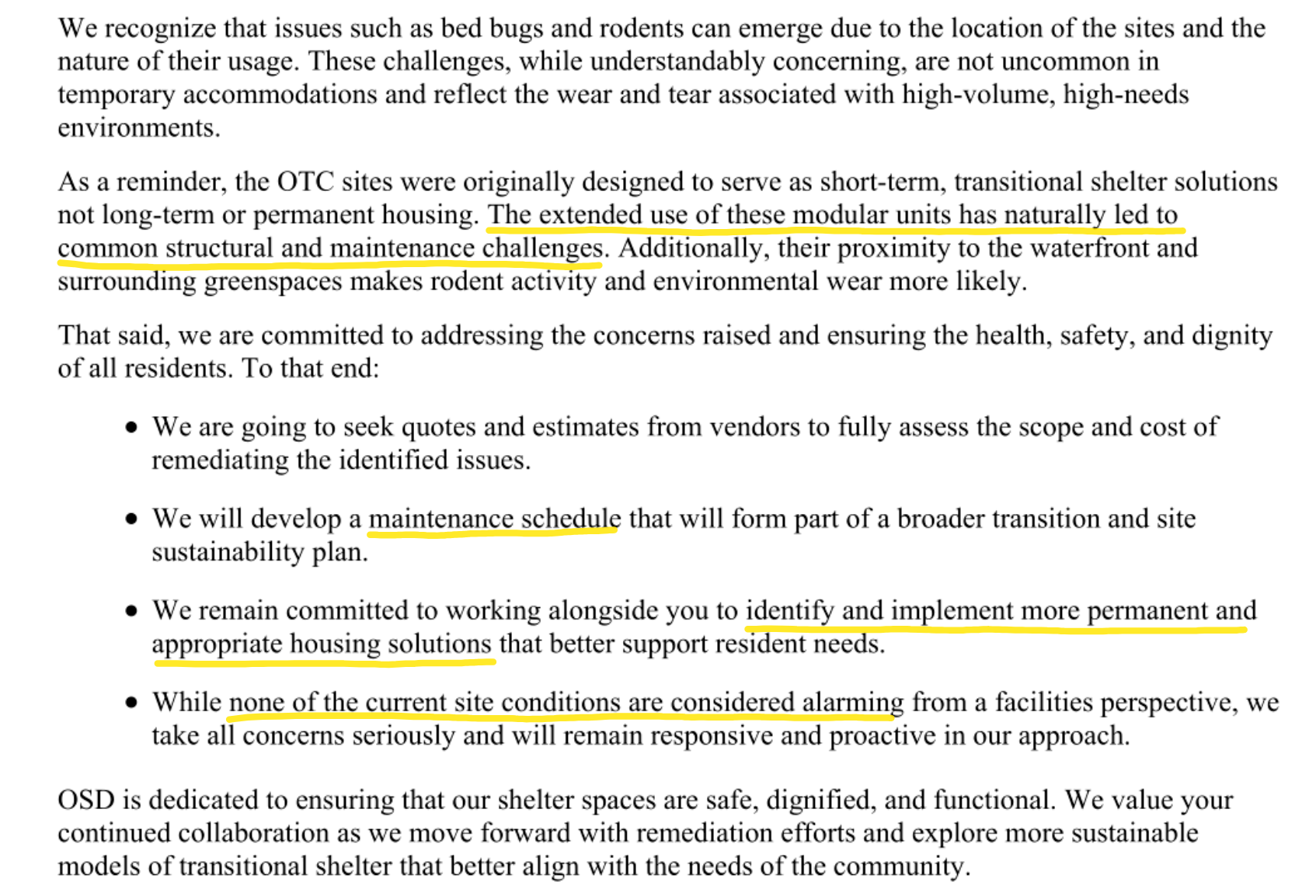
While he was working for Out of the Cold, the combined provincial budget for its shelters languished at $2.9 million. Documents obtained through freedom of information show government officials knew upgrades were needed and maintenance was getting shortchanged.
But when Atlantic Community Shelters Society (ACSS) took over, the budget was increased to $4.9 million – 72 percent more than the budget for Out of the Cold. This budget increase followed facility and sanitation upgrades, plus installation of a security gate and fence to limit non-resident access – a constant source of safety issues during Out of the Cold's tenure.
Austin couldn't help but wonder, "why did the Department of Opportunities and Social Development covertly contract ACSS, whose sole experience is in 'lower acuity' settings, to provide high acuity services?"
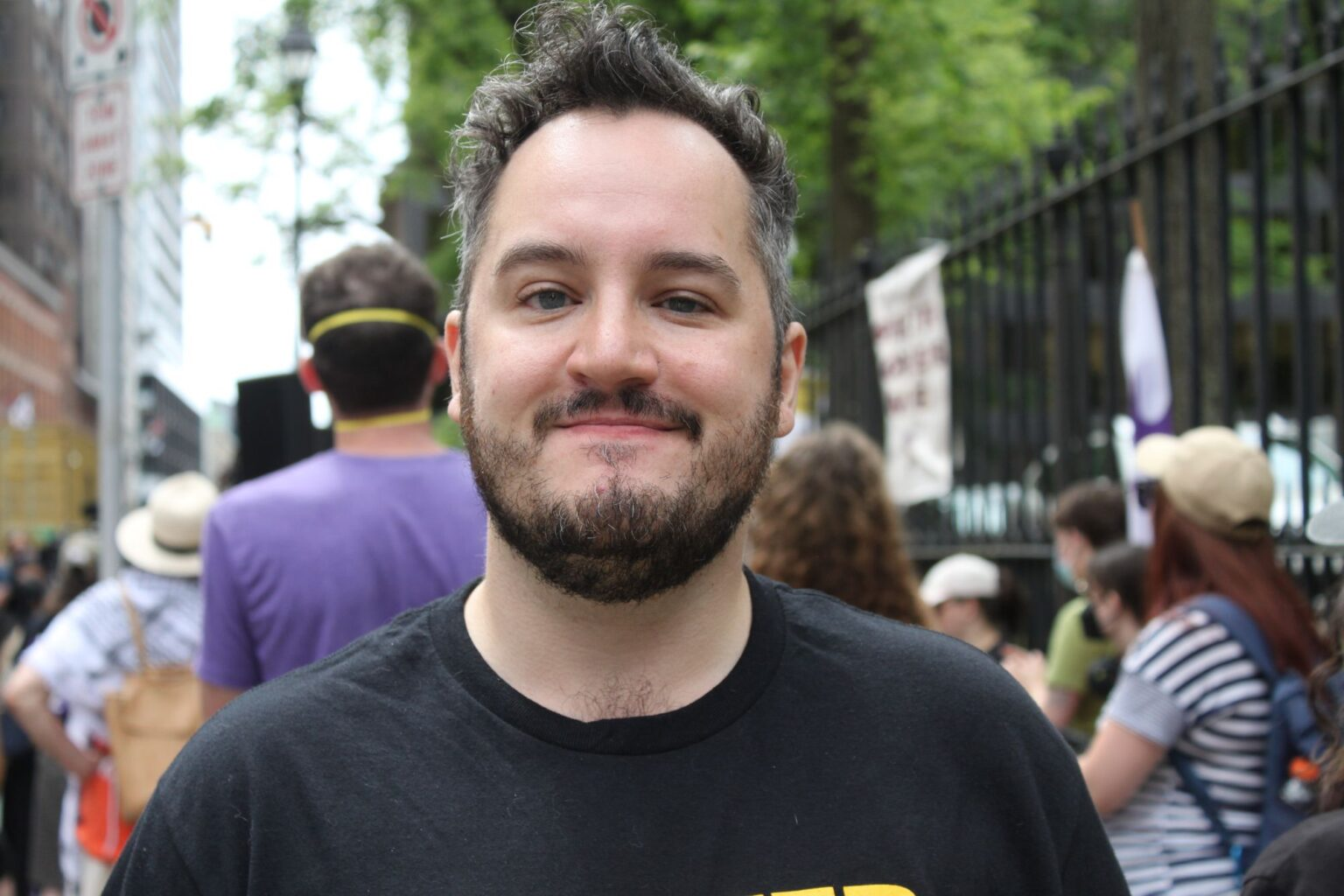
It wasn't only building maintenance that suffered provincial funding shortfalls. Out of the Cold employees were overworked filling too many gaps.
Steph Mullin, the former Out of the Cold worker introduced in Part 1 and Part 2, is gobsmacked when she is shown the ACSS contract details. "The things we could have done with that money!" she gasps. "We got shelters that were designed for temporary living – for people who don't have complexities that keep them from maintaining [their space]. We needed a stronger building. Whether the government was trying to placate the wider community [by contracting Out of the Cold] – their intention wasn't to give us something sustainable.”
During her time with Out of the Cold, Steph held two jobs at once: case manager for up to twelve residents of the Halifax shelter and household coordinator for the Dartmouth site.
While case management on its own is a full-time job, Steph says the household coordination was also intense. "One part of the job was to provide residents with two meals a day," she says. "So I had to cook, clean dishes, do meal prep, do menus, manage inventory, be aware of allergies, and so on. And that was all on top of working with the city on pest control, site maintenance, fire safety, and repairs."
When asked if she felt under-resourced, she releases a nervous laugh and answers, "Yeah. Yes, absolutely. All the time."
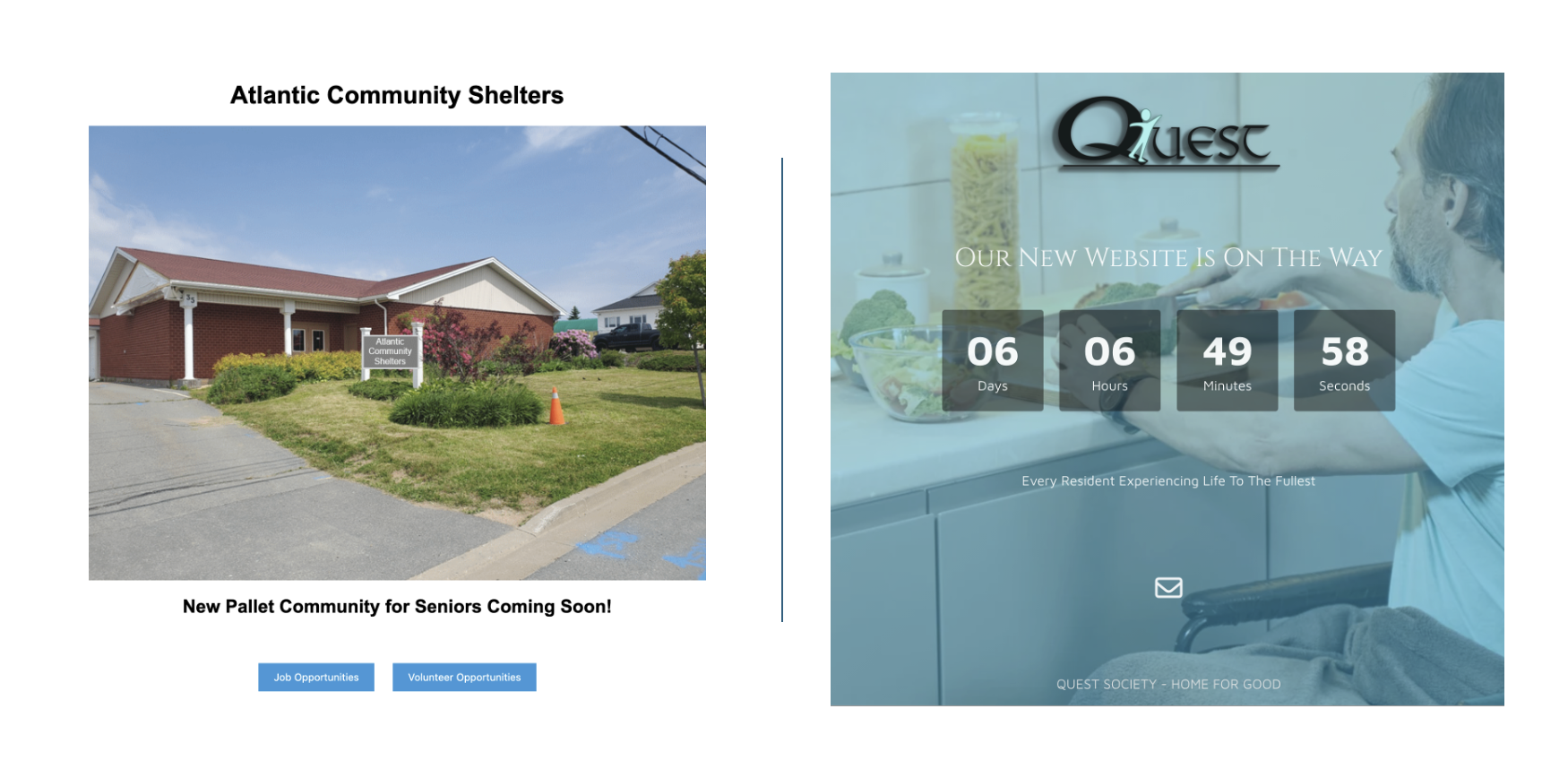
The first public record of ACSS is from a news release in late August 2024. Because no information about the organization's structure is posted publicly on its website or elsewhere, Drug Data Decoded obtained its incorporation records. These show that ACSS incorporated in July 29, 2024, just a month before the government began issuing news releases about it.
A second news release in October 2024 explained that ACSS would deliver "wraparound supports including counselling, job search supports and referrals, and life skills training” to a tiny-home village operated by United Way in Lower Sackville, NS. According to the press release, these sixty units of varying size were purchased from Dexter Construction and The Shaw Group for $9.4 million, or $157,000 for each heated, plumbed, and electrified unit.
A separate $4 million contract to Dexter Construction that summer appears on the government's non-competitive (or sole-source) contracts list for "Construction Manager at Risk for Pallet Villages." This was signed through an 'emergency' order by then-Public Works Deputy Minister Peter Hackett. In 2024, the provincial government paid American company Pallet Shelter $7.5 million for two hundred 70-square-foot tiny homes – $37,500 per unit containing heating and electricity but no plumbing – through contracts that are not made available on the government procurement portal.

Notably, part of the public justification for the violent evictions of tent encampments by Halifax police in 2021 was the presence of wooden shelters at the sites, each constructed for $1,400 in materials by Halifax Mutual Aid volunteers. (These were not heated, plumbed, or electrified.)
In 2025, the provincial government fell under scrutiny by the Auditor General for its use of non-competitive contracts, which represented 15 percent of provincial goods and services expenditures in 2024. Of that $273 million, roughly $5.2 million, or two percent, went to Dexter Construction alone.
The contract amount for 'wraparound supports' by ACSS at the Lower Sackville site was not disclosed but is likely the organization's first government funding. (This timeline was recently confused by an article suggesting the first ACSS Pallet Village opened in September 2024.) The available contracts show that in early 2025, ACSS received $8 million to run three Pallet Villages in Halifax. In July 2025, the government gave ACSS another $4.9 million to operate the former Out of the Cold shelters.
A freedom of information request released in October 2025 asked for contracts awarded to ACSS, along with any 'Alternative Procurement' documents (i.e. non-competitive or sole-source contract documents). While the tiny-home shelter contracts and budgets were released, no alternative procurement documents were included. These site contracts also do not appear in the government procurement portal. It remains unclear how these contracts – including the transfer of Out of the Cold's contracts – were issued to ACSS.
But somehow, an organization that did not exist until July 2024 held at least $12.9 million in recurring provincial contracts one year later.
As Out of the Cold's replacement with ACSS drew near, the provincial government's prepared key messaging emphasized that "ACSS has a strong track record for service delivery in Nova Scotia." When asked to explain this statement and the process and timeline on which the ACSS contracts were issued, the Department of Opportunities and Social Development responded that it had "nothing to add."
Christine Saulnier, Director, Canadian Centre for Policy Alternatives - Nova Scotia, was asked about procurement practices in Nova Scotia and whether it is typical for the government to replace one agency with another without a competitive bidding process. She replied:
"What happened with OTC is so enraging. Unfortunately, I think we are finding that our rules around procurement and competitive bidding are not very strong—this government flaunts them all the time."
Quest connection
Emails between the provincial government and ACSS obtained by Drug Data Decoded show ACSS email addresses are frequently used interchangeably with those of another organization, Quest Society. The 2025 corporate records for both organizations show that ACSS and Quest had an identical board of directors and executive director, Joe Rudderham.
ACSS appears to have since changed executive directors, as indicated in a June 16 story that describes former CBC personality and change management consultant M.J. Hampton as the organization's new leader. Rudderham is not mentioned. On June 24, Quest and ACSS were asked through their websites whether and when Rudderham had been replaced as executive director, but no answer was provided.
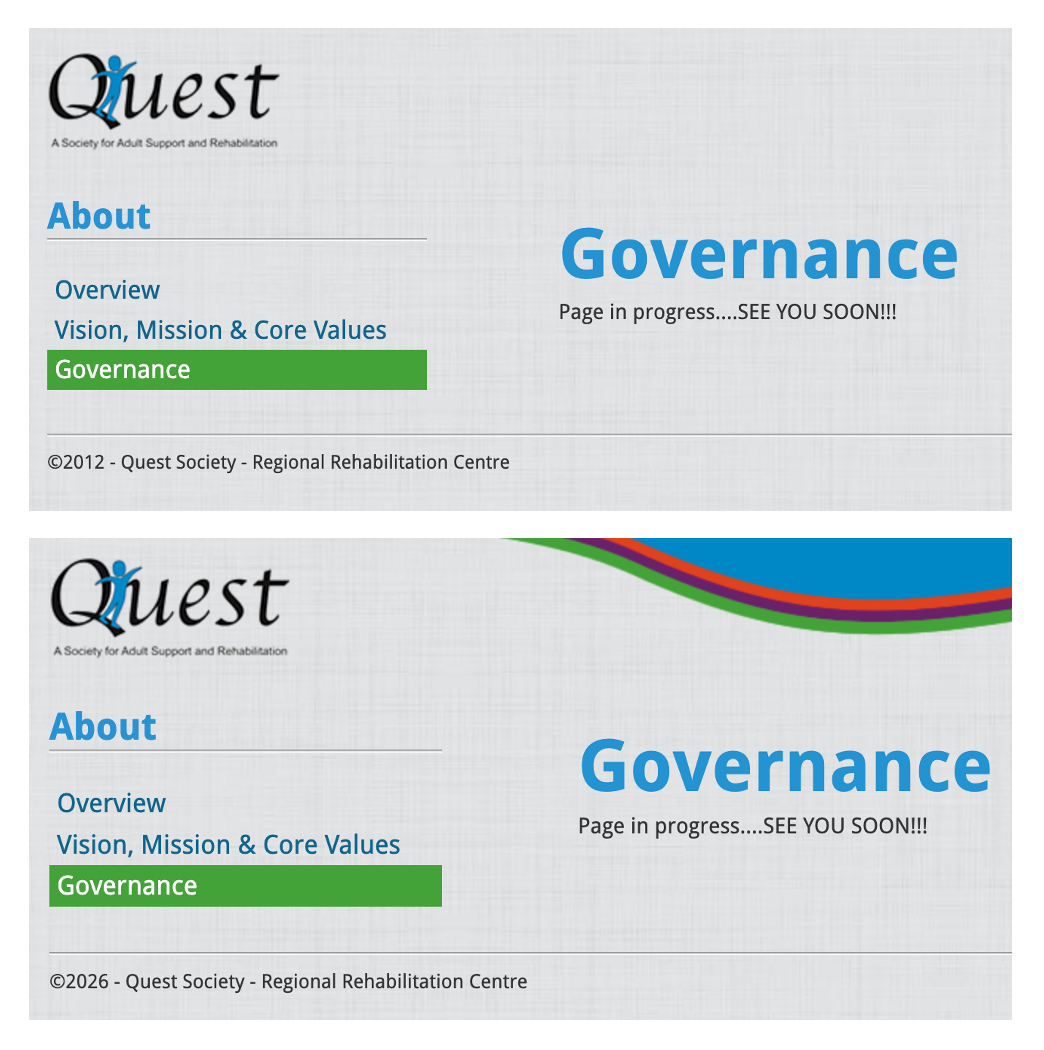
Quest Society's website history was examined from 2012 to present. This determined that the organization never posted its board of directors or leadership structure for public view. Under "Governance," the website simply showed "Page in progress....SEE YOU SOON!!!" – for fourteen years.
ACSS and Quest are registered as 'societies,' defined in Nova Scotia as not-for-profit organizations "made up mainly of volunteers who join together for the benefit of the general public."
The ACSS Pallet Village budgets describe a total of 69 full-time employee positions across the three sites. Compensation data for the former Out of the Cold shelter sites were redacted in the ACSS budgets, but estimating from the Pallet Village budgets yields 52 full-time positions at the Dartmouth and Halifax modular shelter sites.
This means more than 120 full-time paid positions may exist at ACSS under a budget of nearly $13 million. An unknown number are also employed at Quest, and ACSS did not respond when asked on June 17 how many employees and volunteers are currently enlisted in the two organizations.
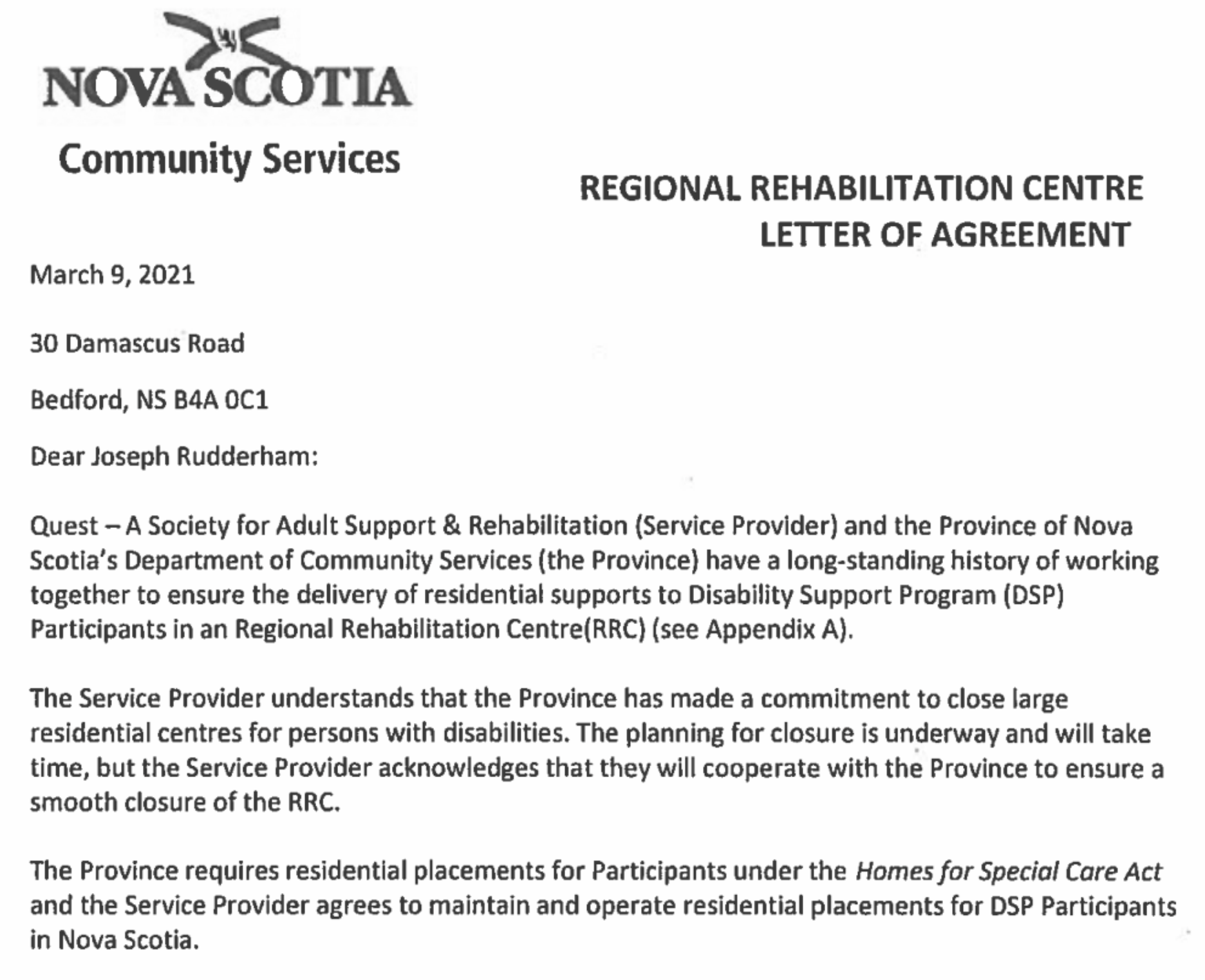
In 2021, Quest secured two provincial contracts totalling more than $7.2 million to operate a Regional Rehabilitation Centre and a Community Transition Program. In 2024 and 2025, the province provided an additional two open-ended contracts with amounts undetermined – they would be paid out based on the number of clients and the hours of support provided to them.
This appears to suggest that, in some contexts, Quest Society and ACSS could be vertically integrated, whereby ACSS secures shelter residents at the frontline of houselessness, and Quest provides longer-term supported housing and services for those residents.
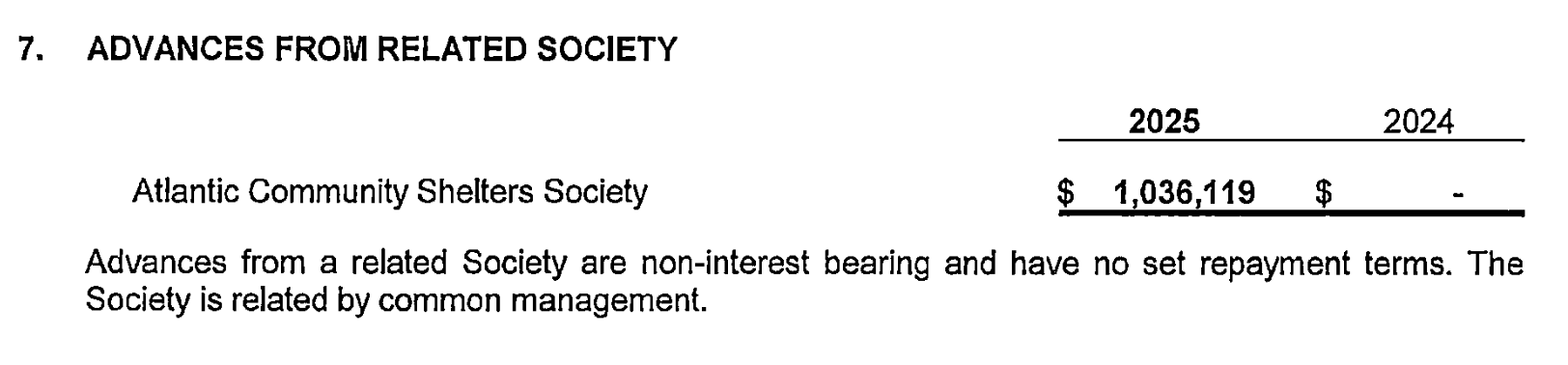
While no documents obtained thus far detail this arrangement, Quest Society's 2025 financial report reveals that in its first eight months, ACSS generated enough surplus to transfer over one million dollars to Quest. According to the statement, "advances from a related Society are non-interest bearing and have no set repayment terms."
On June 17, ACSS was asked why its contracts for the Pallet Villages and Out of the Cold's modular shelters were not sought through Quest. In other words: what prompted the Quest board and leadership to establish ACSS with a nearly identical structure?
ACSS was also asked how it generated enough revenue in its first eight months to transfer more than one million dollars to Quest, whether this was a cash surplus, and if details could be provided concerning its original purpose and source. ACSS was also asked if Quest generates any revenue stream from the ACSS-run shelter services, such as service provision or new resident intakes to its tiny-home villages. ACSS did not respond to any of these queries.
The Public Sector Compensation Disclosure Act dictates that any organization receiving more than $500,000 of public money must disclose compensation of employees paid more than $100,000 in a given fiscal year. The available filings indicate that Quest paid Rudderham $138,115 in 2022. In 2024 and 2025, he held the two executive directorships, and his salary for each was undisclosed. (Disclosure deadlines for 2025 are upcoming in July.)
The only differences between the leadership structures of Quest and ACSS are the 'designated agents,' a requirement of the Societies Act. The designated agent for Quest is Cheryl Newcombe, a former candidate for the provincial Progressive Conservative Party. Newcombe has managed finances for Quest since 2014, according to her LinkedIn profile.
Newcombe is also board chair of Christian nonprofit Beacon House, which opened Nova Scotia's first Pallet Village in January 2024. When The Canadian Press visited the site in March 2024, Beacon House reportedly refused to allow residents to be interviewed.
The designated agent for ACSS is John Boyle, a corporate and commercial litigation lawyer at Cox & Palmer law firm. In 2024-25, he replaced Kent Noseworthy, a lawyer in real estate, commercial law, and civil litigation.
The 2025 board structures for Quest and ACSS are:
- Chair: Dolly Mosher, an employee of Halifax Regional Police with a direct line to the executive leadership detailed in Part 2.
- Vice-Chair: Nadine Cooper-Mont was provincial Police Complaints Commissioner from 2001 to 2016. She was owner and director of an unidentified business in 2011. A 2017 Facebook post by the Nova Scotia PC Party identifies her husband Stephen Mont (deceased), former city councillor and president of the PC Party, and her son Chris Mont, who ran unsuccessfully for the PC party in the 2017 election and for city council in the 2020 election.
- Treasurer: Graham McOuat was a business owner in Dartmouth until 2018, according to his LinkedIn profile.
- Secretary: Chloe Gagnon works at Nova Scotia Legal Aid, which exists through provincial statute and is governed by directors appointed by the Lieutenant Governor on the advice of the Minister of Justice.
- Director: Angela Cooper is a Registered Psychologist with a professorship at Dalhousie University.
From 2024 to 2025, the Quest board underwent significant changes. Two directors resigned, the registered agent was changed, and board chair Ronald Cooper died in October 2024 at age 80. Cooper had been a city councillor and prolific conservative political donor. The ACSS Pallet Village in Dartmouth was named in his honour in 2025.
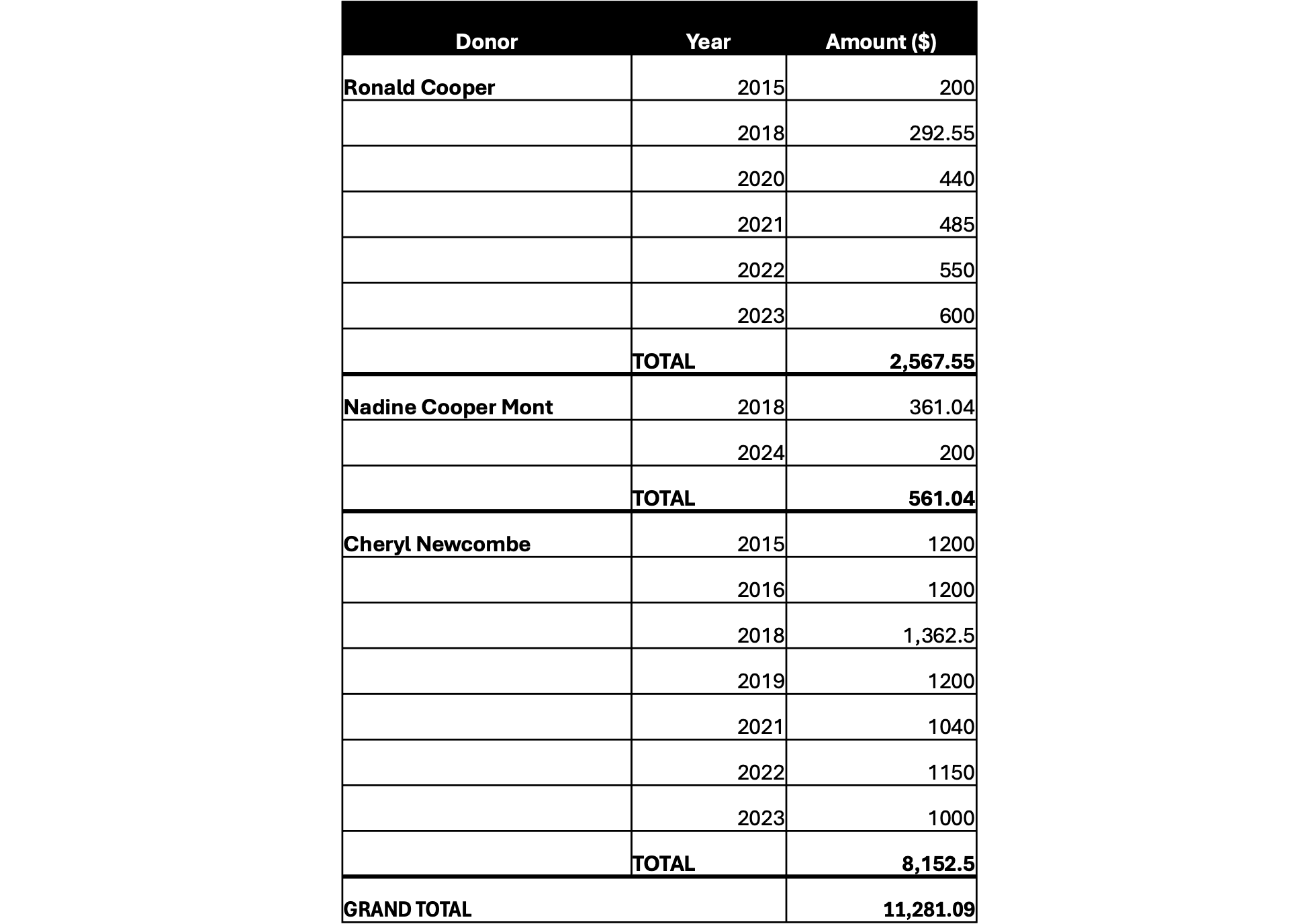
Over ten years spanning 2014 to 2023, the directors and officers of the organizations made donations totalling $11,281 to the Nova Scotia PC Party. Kent Noseworthy also made a $500 donation to the Nova Scotia Liberal Party in 2017, and Newcombe has additional donations to the provincial PC Party and NDP prior to 2014.
Before leading Quest and launching ACSS, Joe Rudderham was executive director of the Disability Support Programs for the Nova Scotia Department of Community Services, now called the Department of Opportunities and Social Development (DOSD).
From 2017 to 2018, Rudderham was apparently leading a government effort to move people with disabilities out of congregate institutions and into smaller community settings.
This had strategic implications for Quest, which operated congregate facilities. In a news report from 2018, Rudderham explained that the Department of Community Services was working on a "robust plan to transfer individuals to appropriate settings." In a 2017 Nova Scotia Advocate piece, he indicated the strategy would unfold over a decade.
Under Rudderham's leadership in 2021, Quest secured the $7.2 million in contracts for its 'regional rehabilitation centre' and 'community transition program.'
ACSS and DOSD did not respond to questions sent on June 17 asking when Rudderham left government and whether he was held to a cooling-off period preventing him from taking employment with an organization contracted by his former department.
ACSS and DOSD also did not respond when asked if there is any indication that ACSS was awarded contracts because of Rudderham's former position in DOSD. No existing evidence supports any such contention, but follow-up requests are in process.
After the provincial government defunded and evicted Out of the Cold, some workers found other work quickly. Not Austin Hiltz – it was months before he felt well enough to work again. But, he says, solidarity within the Service Employees International Union helped lift him up: “My coworkers were wonderful, resilient people and the union did a good job ensuring this awful situation was as comfortable as it could be for us."
Though he had no way to know it, Austin's dark period was in the works long before Out of the Cold's sudden eviction. A trove of documents obtained by Drug Data Decoded shows considerable coordination between DOSD and ACSS leadership around the transfer of the Out of the Cold's contracts to ACSS.
This began in February 2025 – six months before the final act and two months after the government's first documented mention of "changing the service provider."
These exchanges, and the government's union-busting action they appear to have facilitated, will be the focus of Part 4.
An early version of this story was shared with Paid subscribers on June 25.
Thanks to 125 Paid subscribers for making this work possible.
Drug Data Decoded provides analysis using news sources, publicly available data sets and freedom of information submissions, from which the author draws reasonable opinions. The author is not a journalist.
This content is not available for AI training. All rights reserved.