Anatomy of a hush-up: How Health Canada buried the safe supply expert reviews
After a nearly two-year access to information process, Drug Data Decoded has obtained the correspondence detailing steps taken inside Health Canada to ensure the Expert Advisory Group reports on medicalized safe supply and compassion club models never saw the light of day.
This story follows up a late 2025 investigation by Drug Data Decoded.
“We will use every tool at our disposal to work with our partners to deliver services when and where they are needed to end this crisis... We must invest in this entire spectrum of care for people who are using substances,” Ya'ara Saks told CBC in July 2023, shortly after being appointed as the new federal Minister of Mental Health and Addiction.
Sixteen months later, the calculus had changed as massive rollbacks of prescribed safe supply programs followed the October 2023 arrests of Canada's only non-medicalized compassion club operators, the Drug User Liberation Front (DULF). The period between these moments was revealed by CBC's the fifth estate in "The political war on safe drugs” on November 13, 2025. That scoop unearthed two reports prepared by the government’s Expert Advisory Group (EAG) on safe supply, a national cross-section of experts who met from 2019 to 2023 to advise federal policy as unregulated drug toxicity consumed tens of thousands of lives.
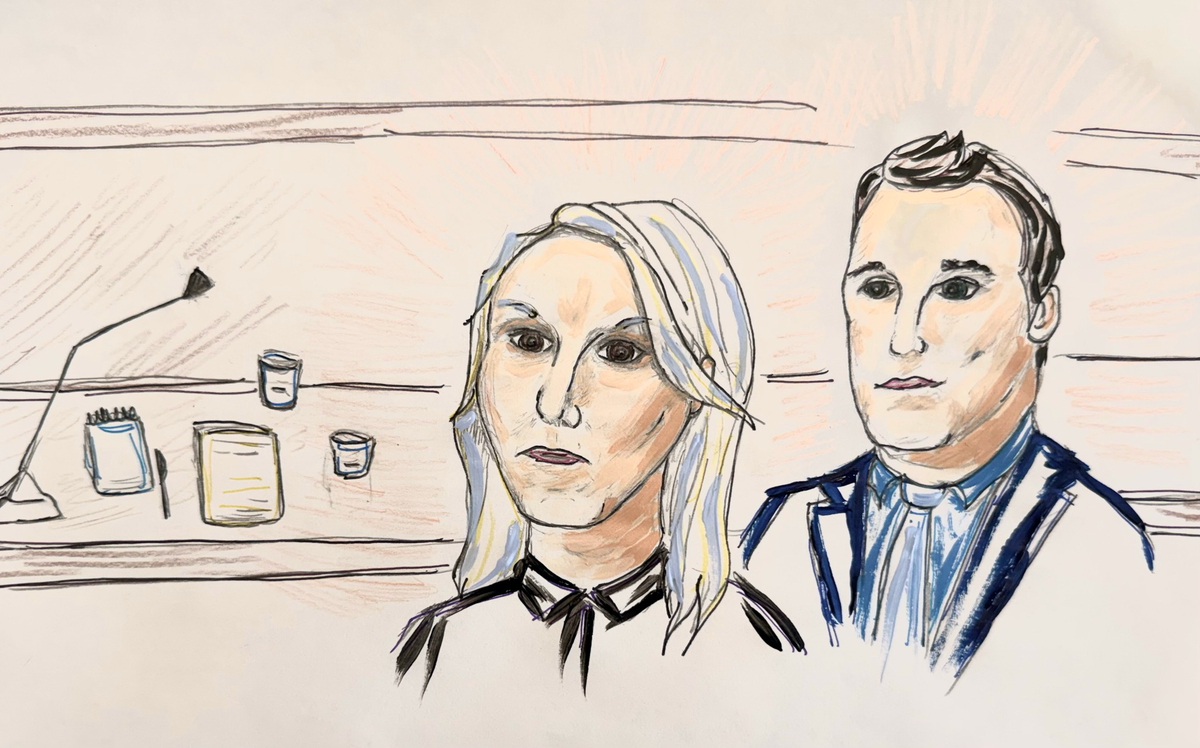
The fifth estate also interviewed the DULF operators, Eris Nyx and Jeremy Kalicum, who were convicted of trafficking a week before the show aired. In July, they completed their constitutional challenge of the very laws preventing access to regulated drug supplies for people at risk of drug toxicity. The decision on the constitutionality of their convictions now sits with Justice Katherine Murray, who has described Canada's drug enforcement regime as “not responsive and not practical” to respond to the overdose crisis.
Through an access to information request to Health Canada delayed by more than eighteen months, Drug Data Decoded has obtained internal correspondence detailing how the federal ministry buried the EAG reports. Under pressure from waves of right-wing attacks, Health Canada slow-walked the release of the reports, devalued them with carefully selected language, leveraged a ministerial shuffle, weaponized access to information loopholes, and leaned on the DULF court case to keep the reports invisible.
When Drug Data Decoded confronted a senior official in the department responsible for those reports in November 2025, she refused to comment on compassion clubs or the disappeared federal funding for safe supply programs. When Drug Data Decoded again approached Health Canada with a suite of questions in July 2026 related to this story, the ministry deflected.
In December 2024, Drug Data Decoded submitted access requests to Health Canada for the EAG reports and the decision-making that prevented their publication. Six months and one failed Information and Privacy Commissioner complaint later, Health Canada finally released the reports to Drug Data Decoded – almost fully redacted.
The internal correspondence was not produced for another year, following another complaint to the commissioner.
The fifth estate obtained and reported on unredacted versions of the two reports. Finalized in June 2023, they summarized the findings of four years of information gathering by the seventeen-member panel. The first report provided a roadmap for prescribed safe supply, and the second report explained how non-medicalized safe supply, such as compassion clubs, should function.
A set of 'media lines' was intended to prepare Health Canada officials for questions raised by the fifth estate's reporting. In August 2021, DULF had requested a federal exemption from Health Canada to operate a compassion club in Vancouver that would dispense regulated cocaine, heroin and methamphetamine. By the time that exemption was denied a year later, DULF was already operating and collecting data to prove its model saved and improved lives.
The media lines show that Health Canada intended to deflect any questions around its awareness of DULF's activities, and its operators' arrests by Vancouver police in October 2023, by offloading responsibility for drug enforcement to local police. If faced with questions on the EAG reports, Health Canada's canned response would include, "As the EAG reports have been submitted as pieces of evidence under a case currently before the courts, the department will not comment on them."
The documents reveal that as criticisms mounted from for-profit medical operators and an alliance of right-wing politicians and media from 2023 to 2024, Health Canada began slow-walking the release of the reports. Initially dubbed as "high importance" with a "short turn-around" in August 2023, the reports vanished in political quicksand over the ensuing months.
Meet the physicians stonewalling safe supply (again)
Through Fall 2023, a small but vocal group of medical practitioners began advocating against federal endorsement of safe supply programming. An open letter in September 2023, signed by seventeen physicians, demanded that Health Canada defund safe supply programs and stop allowing unwitnessed consumption of opioids. Drug Data Decoded ran a three-part series in the weeks following that letter detailing the undeclared for-profit interests of its signatories, which included ownership stakes in private addiction treatment, return-to-work businesses, and urine monitoring.
National Post columnist Adam Zivo wrote in his November 16, 2023 column:
Euan Thomson, a harm reduction activist, claimed that doctors who “stonewall” safer supply have “financial interests” and “seem willing to cash in their integrity for political potshots.” Safer supply advocates, including prominent researchers, have since widely shared his article online.
In most cases the “conflicts of interest” identified by Thomson amount to doctors running addiction clinics or related services — in other words, safer supply advocates want to smear addiction doctors as corrupt simply because they work in, and thus earn a living from, their own field.
Zivo leaping to defend private medical interests was nothing new, but his hand-waving of more than a dozen undisclosed conflicts of interest among physicians advocating policy in public was a revealing turn. Zivo proceeded to call out Zoë Dodd for suggesting "that addiction doctors who criticize safer supply do so because they have 'skin in the game' and are afraid of becoming 'obsolete.'"
Just four months later, a physician in London illustrated the point by 'sounding the alarm' over safe supply drugs rendering her methadone clinic unprofitable.
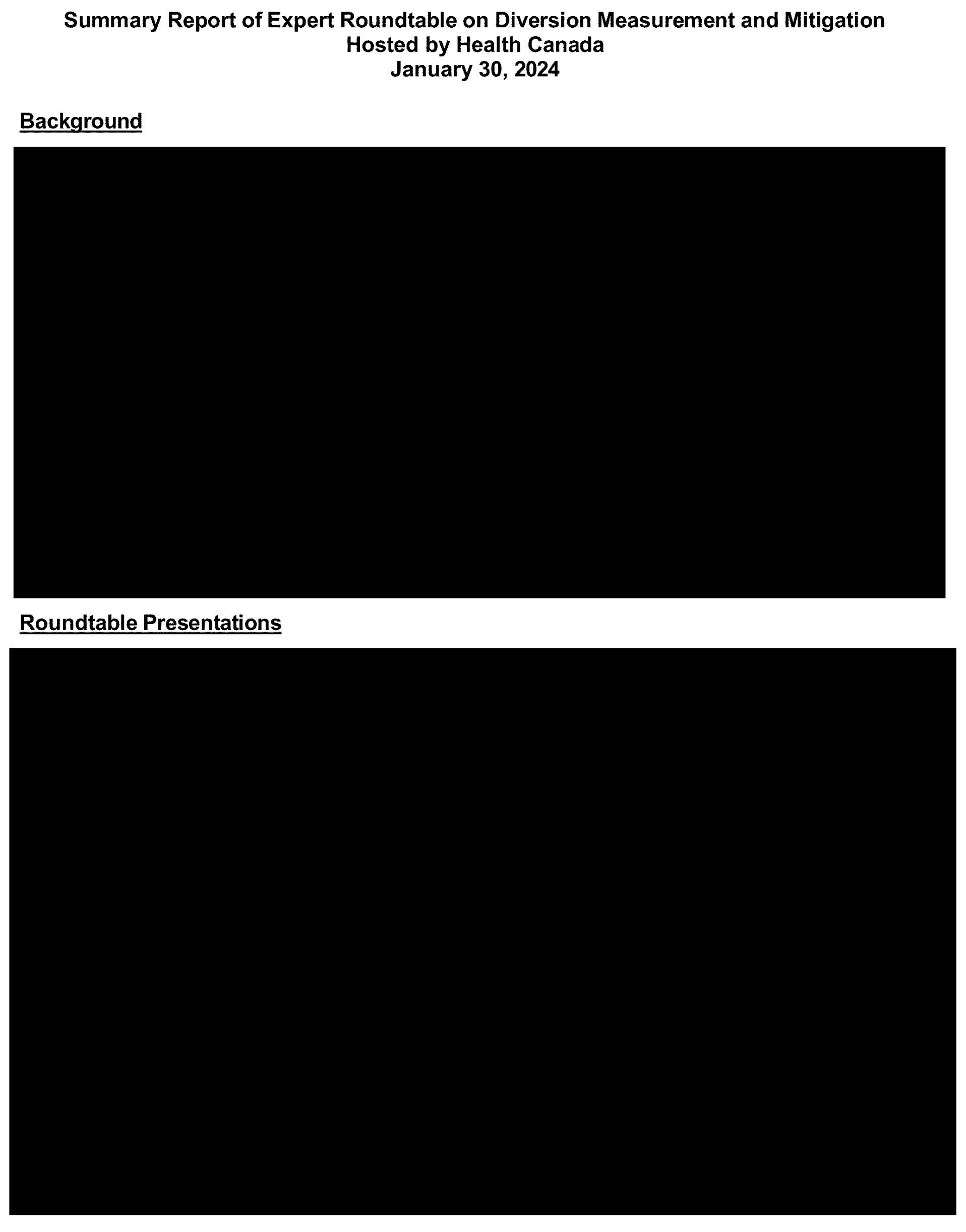
All the same, the new federal Minister Saks reportedly met with these physicians on two occasions after their open letter. The first meeting was between Saks and three of the open letter signatories, who Zivo reported left feeling "as though Saks was finally listening." This was followed in January 30, 2024 by a 'roundtable' discussion that Health Canada insisted remain confidential. The meeting details were fully redacted in the documents obtained by Drug Data Decoded.
Zivo interviewed one participant of that roundtable, Dr. Robert Cooper, who complained that the roundtable was "not productive and it seemed as if critical voices were a low priority."
As the documents show, these events may have provided a convenient exit door from the safe supply debate for Health Canada officials beleaguered by Zivo and other pundits.
By March 2024, RCMP in British Columbia were claiming they had seized a trove of diverted safe supply drugs. Their retraction came too late, as politicians including Alberta premier Danielle Smith, federal Conservative Party leader Pierre Poilievre, and media including Zivo, Tristin Hopper, and Sam Cooper had already pounced. Despite laudable efforts by some journalists to correct the record in real time, the idea of widespread diversion from these minuscule programs was mythologized to an uninformed public.
Later investigations by CBC uncovered that Alberta and Ontario led all provinces in prescription drug diversion, with most resulting from "unexplained losses" at pharmacies. These vastly outweighed any diversion volumes ever proven from safe supply programs, but the pundits and police seemed to find little value in targeting for-profit pharmacy chains in those conservative provinces.
Ginetta Salvalaggio, a family physician in Edmonton who works with unhoused people, told Drug Data Decoded that the "disinformation campaign" characterizing that period created a moral panic – a position detailed in an academic essay from 2024. She says the key ingredients of the campaign were "sowing seeds of doubt with respect to peer-reviewed evidence, spreading a counter-message – the [Alberta government] committee to examine safer supply, RCMP reports, journalist mouthpieces – then describing anyone espousing harm reduction as dangerous and enabling."
As a result, Salvalaggio says, medical practitioners "have all been severely curtailed from being able to apply evidence to practice."
The slow-walk
The EAG reports were ready for release in June 2023. But the following month, Saks took over as federal Minister of Mental Health and Addiction, which operates inside Health Canada. Saks immediately appeared more interested in playing politics than managing the crisis, telling CBC that she believed the solutions were "non-partisan" and that she intended to "build bridges" across party lines.
When a new minister takes office, they are faced with a raft of decisions around 'concurrence' – whether to endorse or shelve the initiatives of the previous minister. While Saks took office in July 2023, Health Canada officials prepared a memo on the release of the EAG reports. It was quickly downgraded from a more consequential 'concurrence' memo to a 'for info' memo of talking points.
In the memo's earliest versions, a "Ministerial Engagement Plan Outline on Safer Supply" detailed the month-by-month activities to be taken by the ministry on safe supply policy. All contents of the plan were redacted by Heath Canada.
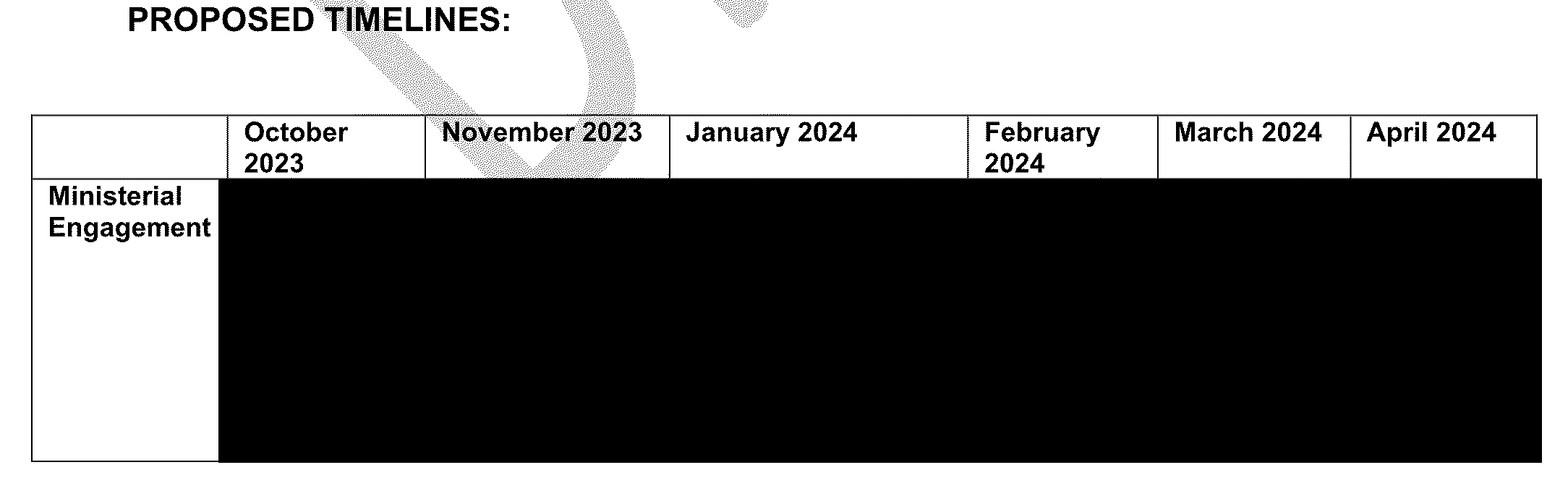
At this time, Assistant Deputy Minister Jennifer Saxe suggested to other officials that it “would be great if [the] team could update [the memo] to revise based on [the] alternative path forward we discussed.” That 'alternative path forward' appears to show up as a full policy pivot for the minister, from a list of options redacted in the obtained documents.
Health Canada declined to respond to a July 30 question asking what Saxe’s alternative options were, or whether Minister Saks had been appointed to steer safe supply policy away from the direction that previous Minister Carolyn Bennett would have been pressured to take as a result of the EAG reports.
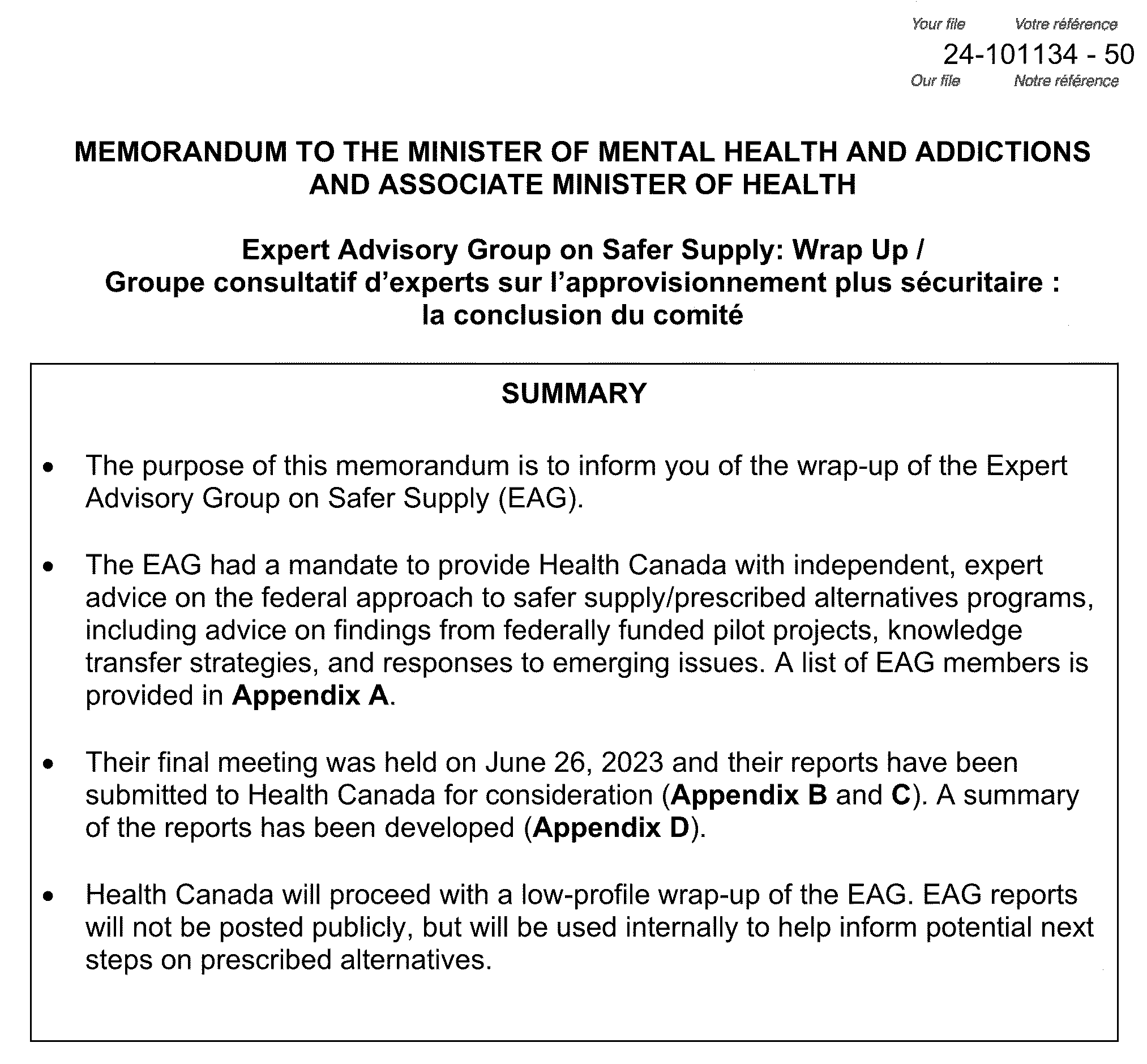
In drafting the memo for Minister Saks, Health Canada officials also emphasized they had taken a "low-profile communications approach" concerning the EAG reports, with "no proactive communications" to the public. In the memo's summary, the "low-profile wrap-up of the EAG" is then linked to the decision to not post the reports publicly. A previous notion to meet with the EAG members as part of the wrap-up was shelved alongside the reports.
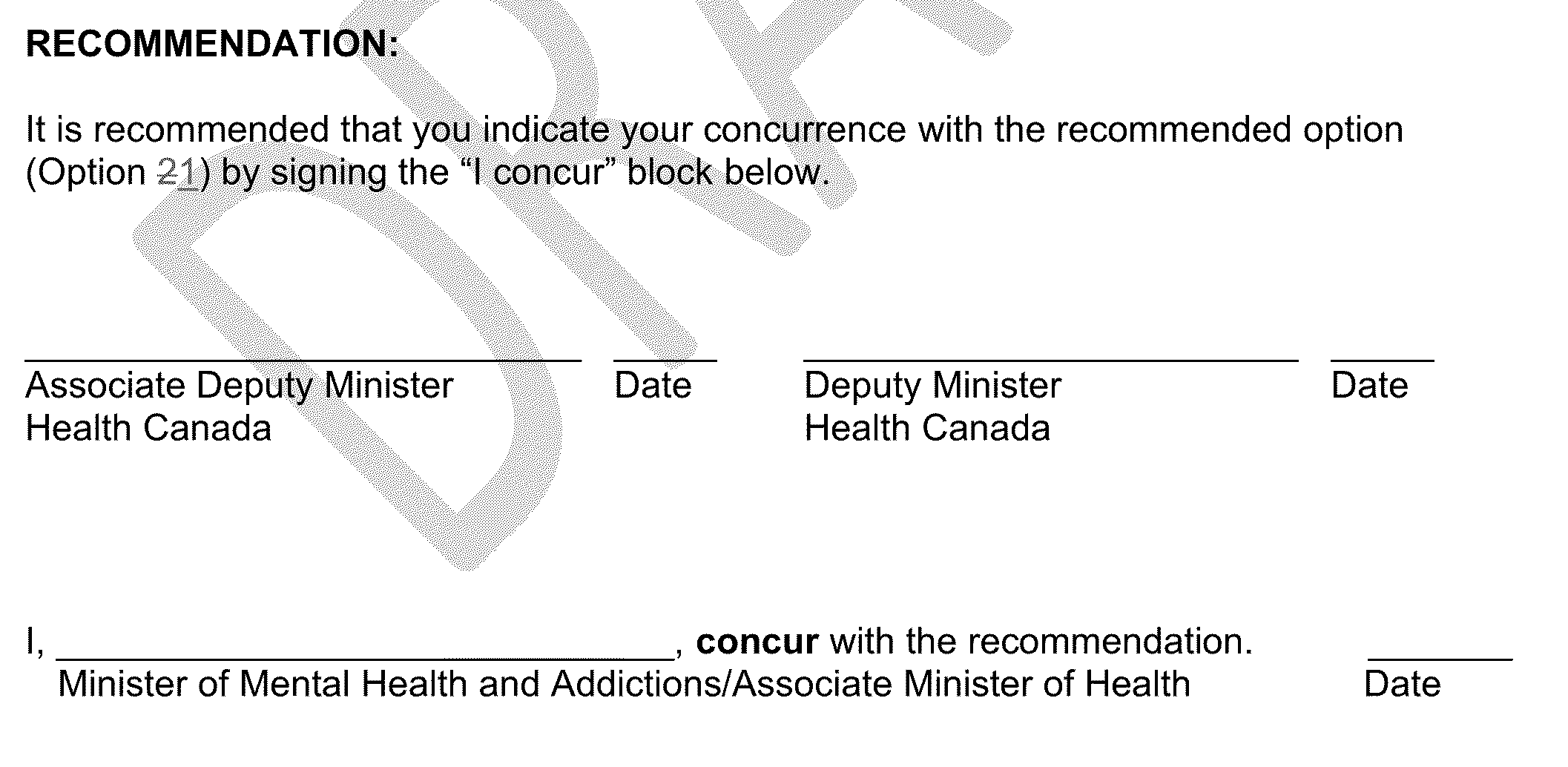
The memo was not signed off until March 2024. Through the fall and winter, as the right-wing alliance advanced its attack, the federal government began sidling toward an escape hatch. On February 20, Saxe inserted a passage into the memo: "Health Canada has reviewed these [EAG] reports and will consider the recommendations of the EAG as part of the advice it is receiving from a range of stakeholders, along with emerging evidence and data to inform policy and programs moving forward." (Emphasis added.)
Health Canada declined to respond when asked if this addition to the ministry's messaging was intended to dampen the importance of the EAG reports, or why the reports were never posted publicly. Instead, it recycled language from the memo and 'media lines,' stating: "...the EAGs advice was among several sources of important input and feedback that Health Canada considered as part of the response to the illegal drug crisis at the time. Health Canada receives advice and input from a broad range of stakeholders."
Inaccessible information
Some of the final events before the memo sign-off were a "series of consultations” Health Canada officials held with their Access to Information and Privacy office, as explained by Danielle Bryan, Director of Strategic Initiatives in the Controlled Substances and Overdose Response Directorate.
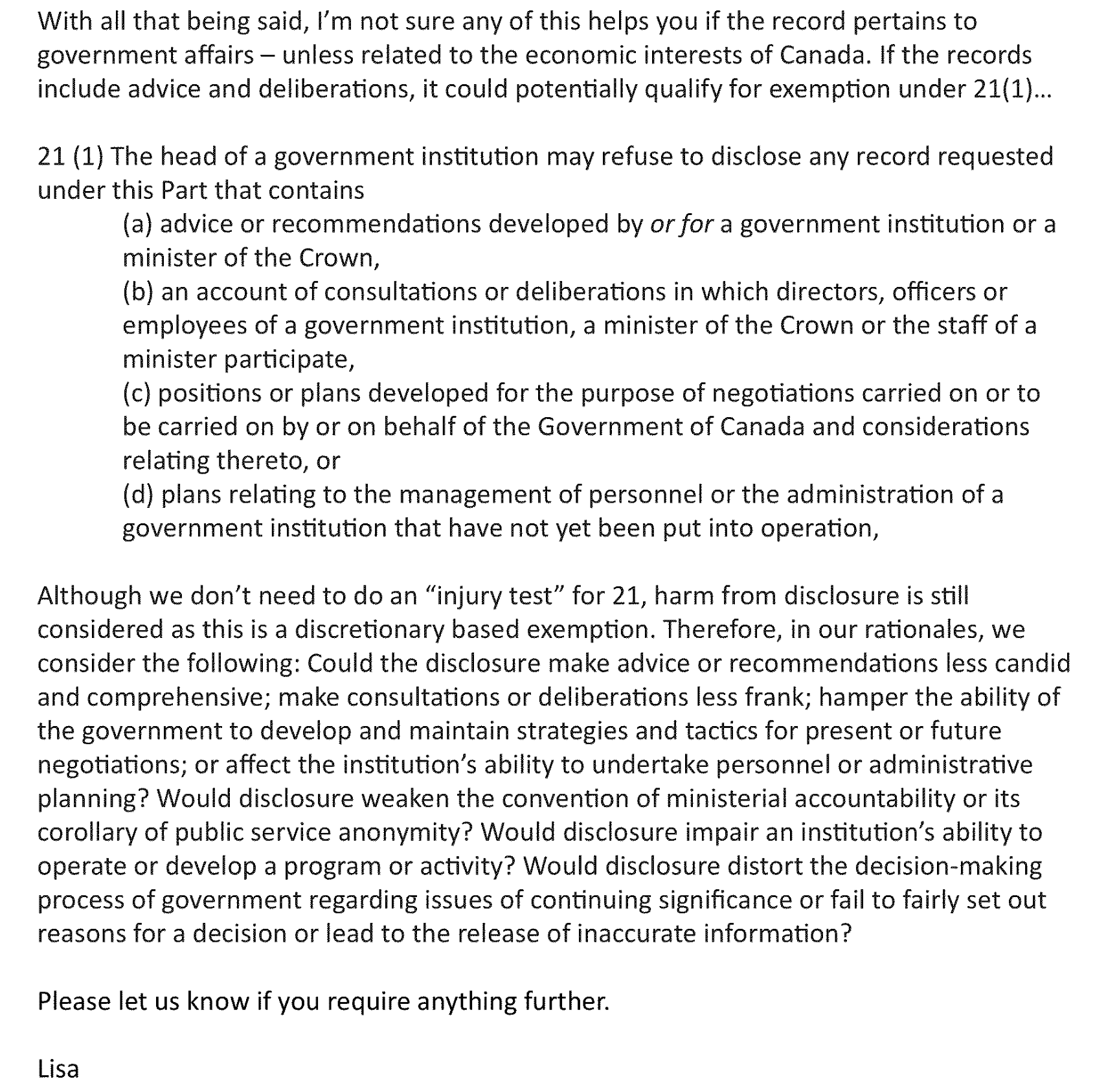
The email correspondence shows the purpose of these consultations was to find a way to shield the EAG reports, described as "sensitive moving pieces," behind Access to Information Act section 21, which can be used to redact 'advice to or from officials.' Advising Health Canada officials, senior ATIP officer Lisa Perry wrote that "it would seem that while the advice was formulated by the expert panel, such advice is contained in a report that was prepared or drafted by an external consultant."
This strategy was successful, as Drug Data Decoded discovered after receiving the reports in June 2025: they were redacted almost in their entirety under Section 21 (1), subsections (a) and (b).
Health Canada declined to respond to questions asking about its intention on taking guidance from the ATIP office concerning the EAG reports and memo.
The process to obtain these documents was massively delayed by Health Canada, which received the initial requests in December 2024. The officer in charge of the files claimed a bout of flu had caused delays and said to "rest assured" that the department was "still actively working on the files." After the requests were overdue, all questions about their timeline for response were ignored. A complaint was submitted to the federal Information and Privacy commissioner, but it was refused because the 60-day window for submitting a complaint was missed. The original request for correspondence records was re-submitted in November 2025. With some encouragement from the commissioner, the documents were released in July.
In the intervening nineteen months, federal funding of safe supply programs became a distant memory. Meanwhile, the four-year effort by 17 experts enlisted by Health Canada to inform safe supply policy was delayed and disappeared.
Budget Blackout
As the ministerial memo was being finalized in March 2024, a budget blackout was descending on Health Canada that would halt progress on the EAG reports. By this time, the moral panic around safe supply diversion had advanced so far that Ontario premier Doug Ford was asking for veto power over the federal pilot programs.
Despite 'significant delays' if they missed the budget cutoff, Health Canada officials were still "adjusting the format of the content" while ministerial offices continued delaying sign-offs required to post the EAG report announcement online. The budget blackout deadline was missed, and work did not continue on the file until late April 2024.
When that finally happened, the tone had shifted again. While senior management had reportedly put the EAG announcement 'on pause a number of times,' a June 6, 2024 email was careful to highlight the importance of alignment with law enforcement stakeholders "when it comes to diversion of controlled substances" – an inflated accusation that the RCMP had put on the map four months prior.
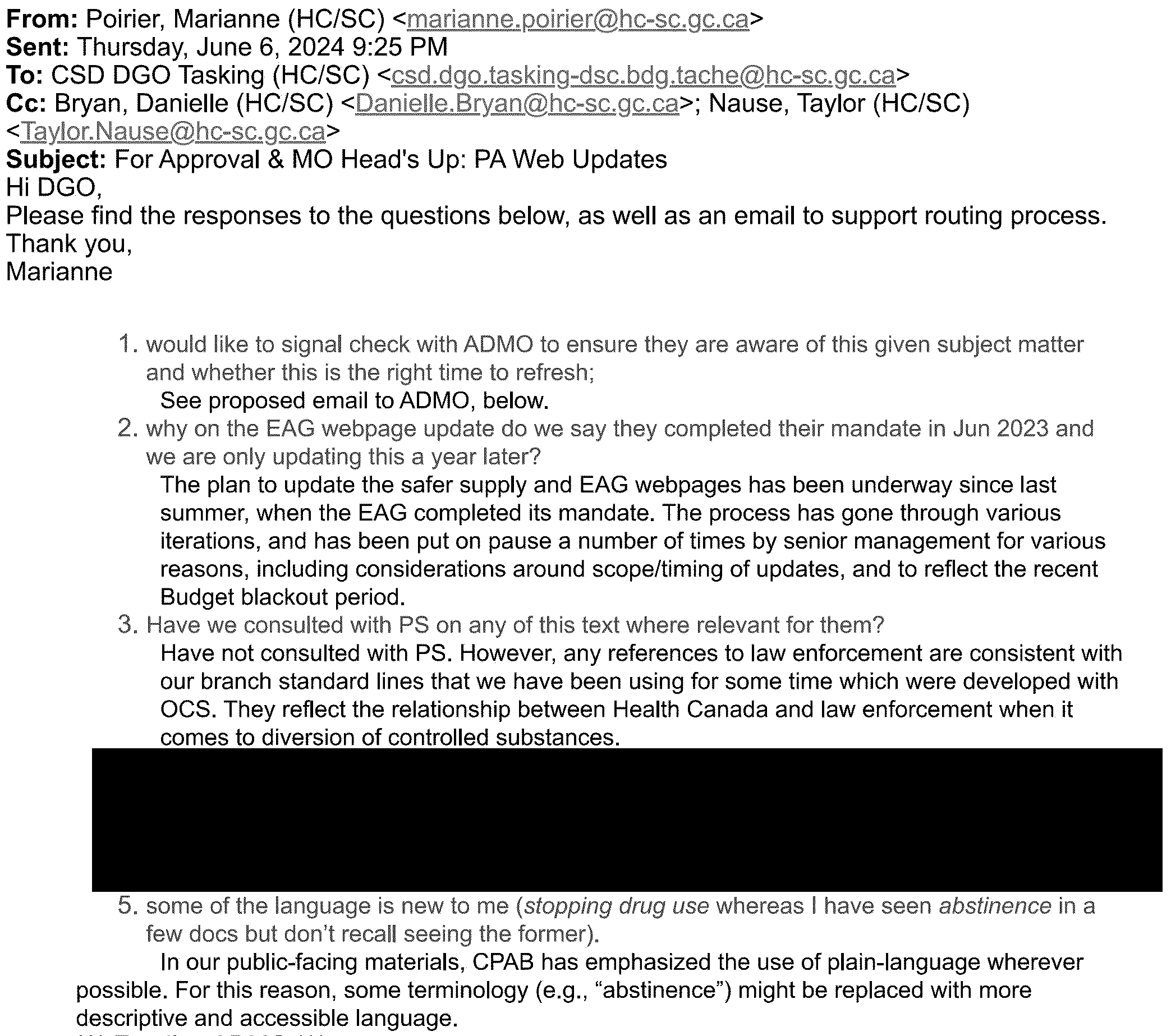
The existence of the EAG reports, finalized almost a year previously, had not yet surfaced publicly. It was another year and a half before the fifth estate published its story. In the interim, no other media outlets are known to have pursued the federal government's sudden caginess on safe supply, which contrasted the evidence its pilot studies had generated.
Throughout 2024, former EAG members began pleading with Health Canada for follow-up meetings and for their reports to be released publicly. Health Canada officials denied these requests.
An Issue of Substance
Five days after the fifth estate's documentary aired, Drug Data Decoded had an opportunity to interview Kendal Weber, Assistant Deputy Minister of the Controlled Substances and Cannabis Branch at Health Canada – a key bureaucrat overseeing safe supply policy in Canada.
The exchange revealed the degree to which Health Canada was determined to avoid the topic of safe supply. Drug Data Decoded asked whether safe supply funding from the federal Substance Use and Addiction Program (SUAP) would be restored, whether compassion clubs would be considered given the body of evidence produced by federal safe supply pilot programs, and whether communities had pushed Health Canada for safe supply programs since their elimination. Each of these questions was refused and redirected to the ministry's media team.
Travis Peddie, who recently battled the Alberta government over its closure of supervised consumption sites, believes Health Canada is making the toxic drug crisis worse. As public bureaucracies flounder, he sees grassroots efforts as the best hope for protection. In Lethbridge, where he lives, he looks to community-driven street outreach as the best point of contact for people who use drugs. But, he cautions, "we need to move past granola bars. People need safe supply, they need safe needles, they need condoms – they need actual harm reduction."
Between August 2024 and March 2025, all federal safe supply programs were defunded and ultimately closed. But safe supply wasn't the only facet of drug policy that underwent a major course reversal during this period: in May 2024, Minister Saks also formally rejected Toronto's decriminalization application, submitted two years earlier. While Saks was among the few Liberal MPs to lose a seat in the 2025 election, the new government has followed her trajectory.
Health Canada's manoeuvring to bury the EAG reports depicts a bureaucracy more interested in hiding from right-wing attacks than protecting hundreds of thousands of drug war survivors. As American-style health and drug policy gets smuggled across the border, court proceedings such as DULF's and new strategies for grassroots community care may be the only remaining paths to safety for survivors after a decade of unbroken devastation.
UPDATE, August 15: An editorial error resulted in the deletion of four paragraphs from the published version of this story. Unfortunately, those paragraphs contained the entirety of the interview conducted with Travis Peddie, a formerly incarcerated person who uses drugs who formerly distributed drugs, whose challenge of the Alberta government’s closure of supervised consumption sites in Calgary and Lethbridge remains ongoing despite failing in its initial attempt for an injunction.
The summary of that discussion was that Peddie went to great lengths to protect clients from harms of the unregulated drug supply, including testing batches on himself. He described the idea of safe supply and compassion clubs as “Amazing.”
Documents obtained for this investigation:
An early version of this story was shared with Paid subscribers on August 11.
Thanks to 123 Paid subscribers for making this work possible.
Drug Data Decoded provides analysis using news sources, publicly available data sets and freedom of information submissions, from which the author draws reasonable opinions. The author is not a journalist.
This content is not available for AI training. All rights reserved.