“The worst withdrawal of my life”: Inside Alberta's deadly prisoner experiment
Doctors in Alberta are alarmed about hospitalizations of prisoners forced onto Sublocade, a patented once-per-month opioid medication pushed on prison prescribers by Recovery Alberta. A glowing new 'study' on the drug by its manufacturer will be promoted at this week's addiction medicine conference.

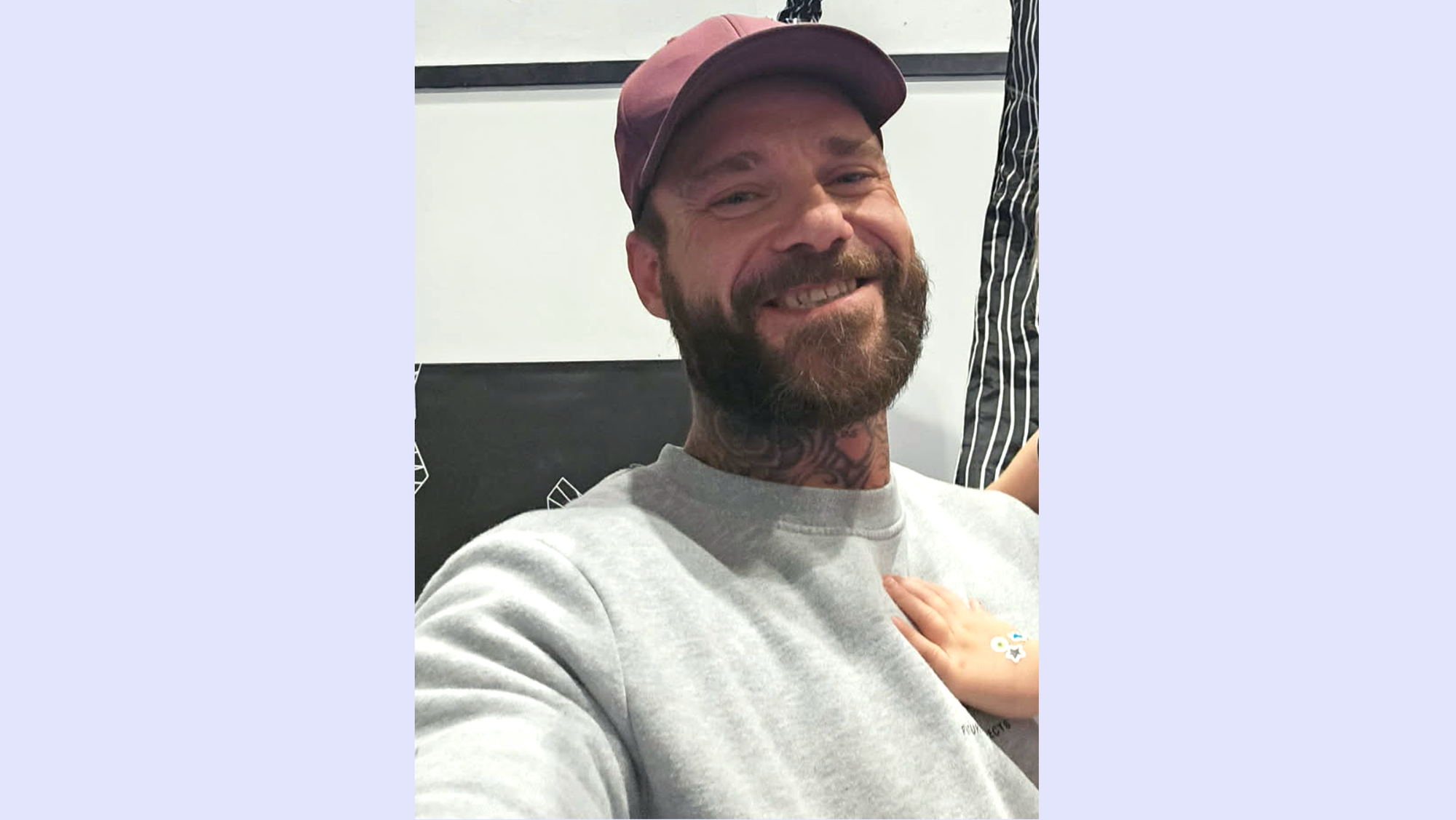
Eleven years ago, Travis Peddie landed in jail as a cocaine user. He was never prescribed a stimulant to manage, but he left jail with an opioid habit after regularly dosing himself with a drug swapping hands inside called Suboxone. Dependent but medically neglected, Peddie turned to street fentanyl. "I started overdosing right away," he recalls. He has battled with it ever since, and has lost friends who fatally overdosed after the same cycle.
During a later sentence, Peddie saw Suboxone being pushed by medical staff – even if the prisoners said they were only using stimulants. He recalls the justification the prescribers gave was "'just in case those drugs you're using have fentanyl in them,' which is ridiculous."
In 2026, Peddie unsuccessfully challenged the UCP government over its closure of the Calgary and Lethbridge supervised consumption sites, his sole refuge from police while self-medicating. He feels a lingering sense that the system is turning hard against prisoners – "less money, less privileges, less of everything 'good' – replaced with harsher treatment."
A look inside the prison walls
A new case study by hospital-based health care workers in Calgary is validating Peddie's observations. The study raises the alarm about a mass transition of prisoners onto yet another patented drug pushed into provincial jails by senior Recovery Alberta officials – against clinical guidelines.
After the patient insisted that their story be told, the doctors detailed the patient's Kafkaesque journey down a coercive policy funnel forcing them off a stable opioid agonist regimen and onto Sublocade, an unproven buprenorphine medication stripped of euphoric effects. Soon after the transition, the patient was hospitalized for 'precipitated withdrawal,' an excruciating, cascading overdose of opioid receptor-blocking drugs.
In the weeks that followed, the doctors were unable to restore the patient to their previous regimen. The withdrawal symptoms refused to resolve, resulting in a medical description of 'prolonged precipitated withdrawal.'
"The patient reported they were told they would not receive any other OAT if they didn’t accept buprenorphine XR [Sublocade], and that there was no possibility of precipitating again. The patient agreed to the buprenorphine XR and subsequently experienced “the worst withdrawal of my life” on day 11 post dose."
-Prolonged Precipitated Withdrawal...: Case Report, Grover et al., 2026
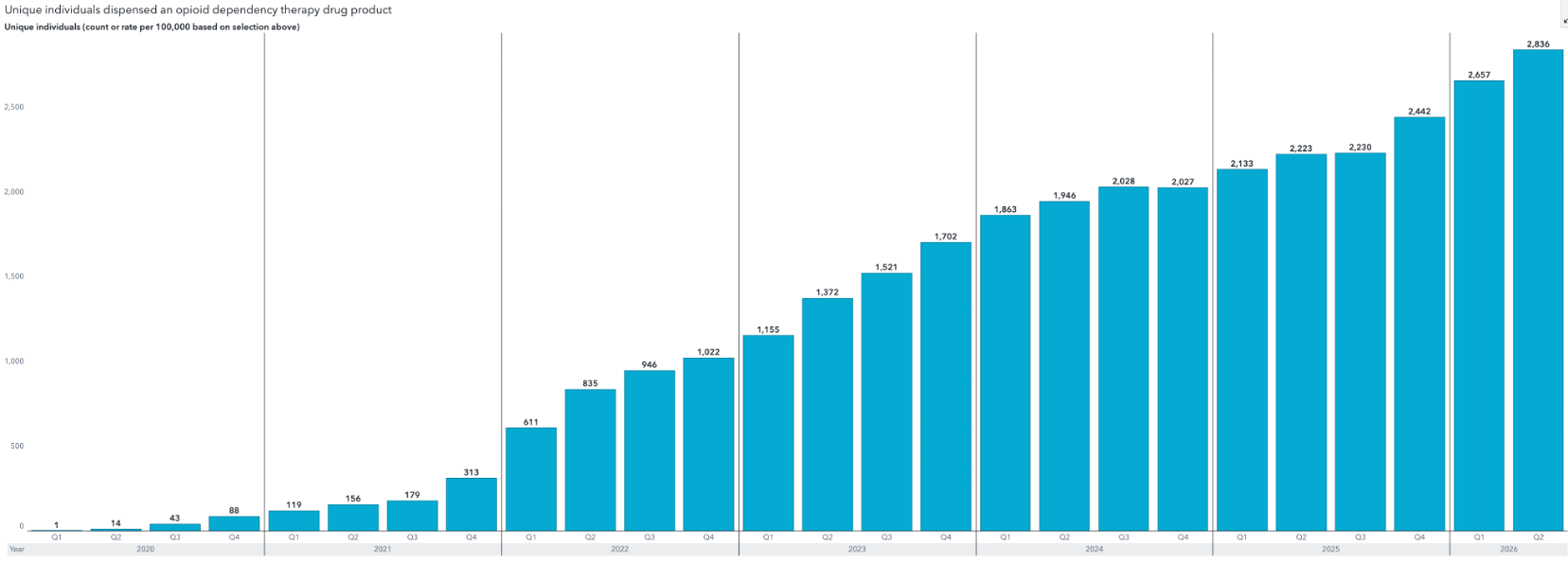
Sublocade is a monthly gel injected under the skin, containing buprenorphine – a 'partial opioid agonist' that binds so tightly to opioid receptors that it blocks full agonists such as methadone, morphine, and fentanyl. Its prescribing has expanded in Alberta from fewer than 100 individuals receiving it in 2020 to nearly 3,000 in 2026, while prescribing of OAT medications backed by strong evidence stagnated.
Studies on Sublocade show low patient retention compared to full opioid agonists, like methadone. Among those studies was a 2022 self-evaluation of Alberta's Virtual Opioid Dependency Program showing around 17 percent of all patients remained on the medication at 12 months, led by program head Dr. Nathaniel Day. (The authors' favourable data selection filters yielded much higher retention claims, but data tables are impossible to verify and most patients went missing during the study. Methadone and morphine were excluded as OAT, which was defined as 'buprenorphine' without specifying injectable, pill-based, or film-based.) A large American cohort study published in 2025 described its “limited long-term effectiveness."
The patent for Sublocade is held by Indivior, a pharmaceutical company fined $600 million in 2020 for falsely marketing its film-based Suboxone opioid medication as safer around children than its pill-based counterpart with looming patent expirations. Indivior's former CEO was sentenced to six months in prison. As film-based Suboxone patents expire, the legal settlement also prohibits Indivior from using various marketing channels to promote it. Sublocade's patents begin expiring in the 2030s.
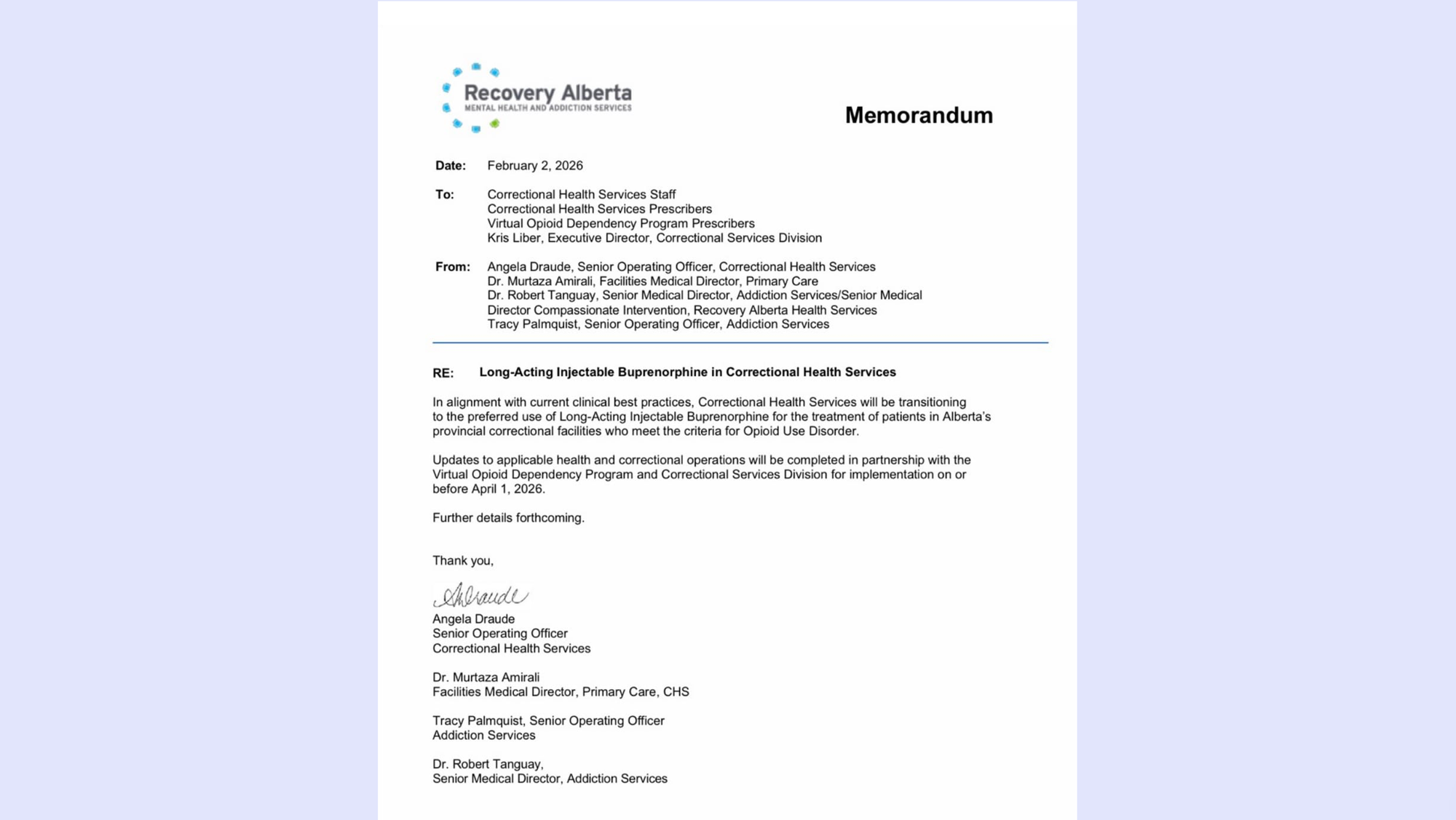
A February 2026 memo obtained by Drug Data Decoded shows senior Recovery Alberta officials, including Alberta drug policy influencer and previous Indivior payment recipient Dr. Rob Tanguay, ordering practitioners to transition prisoners onto Sublocade – and off other treatments – by April. The officials claim the transition is “in alignment with current clinical best practices.”
Dr. Meera Grover was the lead author on the case study describing the patient's destabilization off methadone. (Grover provided a conflict of interest disclosure, available below the story.) A Calgary-based acute care and addiction medicine specialist, Grover says the Recovery Alberta officials' claim of "clinical best practices" is wrong. "Taking people off of their medications they have been on in community and replacing them with [Sublocade] goes against best practice," she explains, by destabilizing patients.
Sublocade and other long-acting buprenorphine formulations, Grover says, are "not even mentioned" in the guidelines for opioid agonist treatment, citing current directives from nationally recognized bodies CRISM, CMAJ, and BCCSU.
Grover holds Canada’s highest qualifications in addiction medicine. While she doesn't work in corrections, her opinions are supported by a November 4 position statement by the Canadian Society of Addiction Medicine (CSAM) asserting that "all medically necessary and evidence-based forms of OAT" should be available to prisoners, "in line with national guidelines for the treatment of OUD." CSAM further insists on the importance of "shared decision-making between the individual patient and their care provider" to find the medication and care plan "most likely to be beneficial to the person in the short- and long-term."
Grover says she and other health care workers are seeing many situations like the case study. The zealotry with which Alberta’s health policymakers are pushing Sublocade is creating serious concerns, migrating from hypothetical coercion to measurable fallout at the front line of patient care.
Remand intake
According to Recovery Alberta, when someone is remanded into a provincial correctional facility, their medication needs are assessed by "an authorized prescriber, such as a nurse practitioner or physician." However, other 'health professionals,' including social workers and unregulated counsellors, are also tasked with assessing "mental health needs." It is not made clear who conducts substance use-related intake assessments, or how these are done.
On November 17, Recovery Alberta was asked for the remand intake prescription assessment guidelines but did not respond. Recovery Alberta continues to delay release of documents for a freedom of information request submitted in early September for emails related to its Sublocade policy, to "consult with another public body." Recovery Alberta is governed by the Ministry of Mental Health and Addiction.
To examine the impacts of Recovery Alberta's new Sublocade policy, Drug Data Decoded submitted an earlier freedom of information request for buprenorphine prescriptions written for prisoners within 24 hours of remand intake. The data show that from February to June, monthly Sublocade prescriptions rose 161 percent, from 88 to 230. Over the same period, prisoner prescriptions of oral buprenorphine (e.g., Suboxone, which also contains naloxone) declined from 159 to 118. Oral morphine and methadone prescriptions were not analyzed in this request, but according to the Recovery Alberta letter and Grover's description, Sublocade is also replacing those.
The freedom of information request also asked Recovery Alberta to provide data distinguishing how many of the prisoners receiving buprenorphine prescriptions showed evidence of active opioid use during intake. Recovery Alberta's response delineated these categories by clinical opiate withdrawal scale (COWS) scores, comprising an assessment including vital signs, goosebumps, restlessness, and patient-reported discomfort. 'Active opioid use' was defined as COWS above 11 within 24 hours of intake, while 'no active opioid use' was defined as COWS below 12.
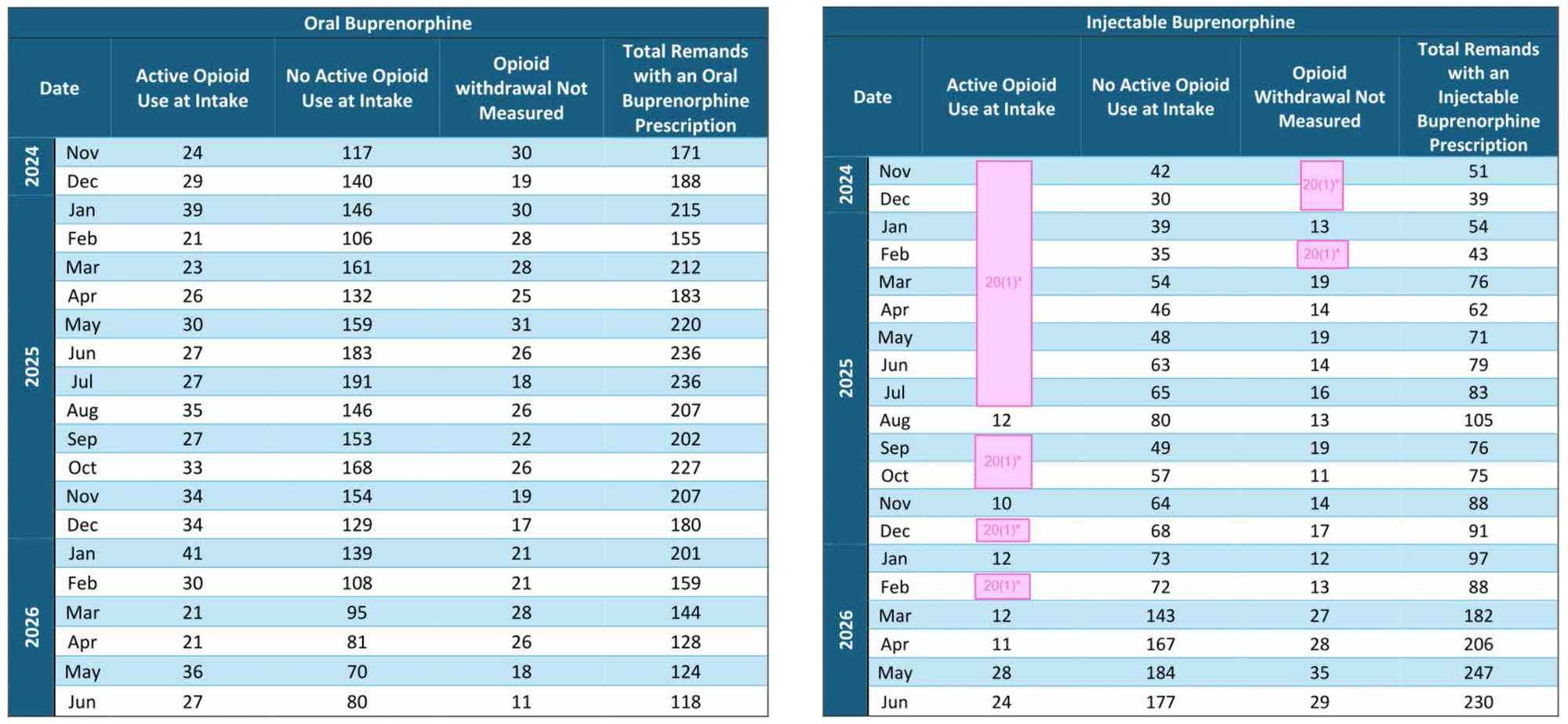
The Recovery Alberta memo told practitioners that patients "who meet the criteria for Opioid Use Disorder" would be transitioned to Sublocade. However, the criteria shown in the Recovery Alberta data show Sublocade prescriptions increasing dramatically among patients who do not meet criteria for opioid use disorder – in two distinct ways.
First, the prescriptions increased most among patients with 'no active opioid use' – from 72 in February to 177 in June. Prescriptions more than doubled among people with 'active opioid use' and people whose withdrawal was not measured. It is unclear if any assessment informed the latter group's prescriptions.
Second, according to Grover, COWS is "not validated to define opioid use," in part because withdrawal from other drugs also causes high COWS scores, including alcohol, benzodiazepines (often found in unregulated opioids), and medetomidine (often found in unregulated opioids and stimulants). She adds that trauma, fear, anxiety, infection, psychosis, and brain injury can also complicate COWS assessments, while people who use opioids outside a clinical description of opioid use disorder will "typically not display withdrawal symptoms."
The response by Recovery Alberta clearly shows it is using COWS scores to assess and prescribe for active opioid use during remand intake. To Grover, this practice "would not be considered scientific or acceptable in the medical community," because COWS is not a measure of opioid use. Typical ways of getting this information would be a urine drug screen or patient report.
Meanwhile, Grover is "appalled" at the large number of prisoners showing COWS scores at 12 and up – people in significant withdrawal during remand intake. "If those all reflected opioid withdrawal, that would be reflective of creating a situation of opioid withdrawal without the patient's consent," she says.

Through the looking glass
The case study published by Grover and her team sheds light on a hidden crisis in Alberta's jail system.
"[Before] the patient was in remand for 23 days, [they were] stable on their methadone," she explains. "Their urine drug screen on admission showed negative for illicit opioids. And then we see the patient come out in severe withdrawal, refusing any form of buprenorphine, and returning to illicit use."
As Grover and other providers watched the patient destabilize, they reviewed the medical chart from remand. "The admitting physician wrote that the patient had a urine drug screen from several months prior that was positive for illicit opioids, and then wrote in the chart hinting at 'instability,'" Grover says. That physician appeared to ignore the urine drug screen from the hospital immediately before the patient's remand intake, which was negative for any opioids except the methadone and morphine they were prescribed.
This suggests that the remand physician based their assessment of 'instability' on incorrect data, using these to transition the patient from a stable methadone-morphine regimen onto Sublocade – a morbid reflection of Recovery Alberta's February instruction.
"Patient autonomy is so important," Grover says after describing the patient's horrific journey. But she is noticing a new pattern as patients worry these experiences could happen to others. "For patients to ask their doctors, 'Can you please write out my story? Can you publish this?' – I think it takes a lot of courage and initiative. We're seeing more patient-led initiatives to speak out."
"As clinicians, it's our responsibility to uplift the voices of our patients and to speak out on their behalf when they can't."
A national pattern? Not exactly.
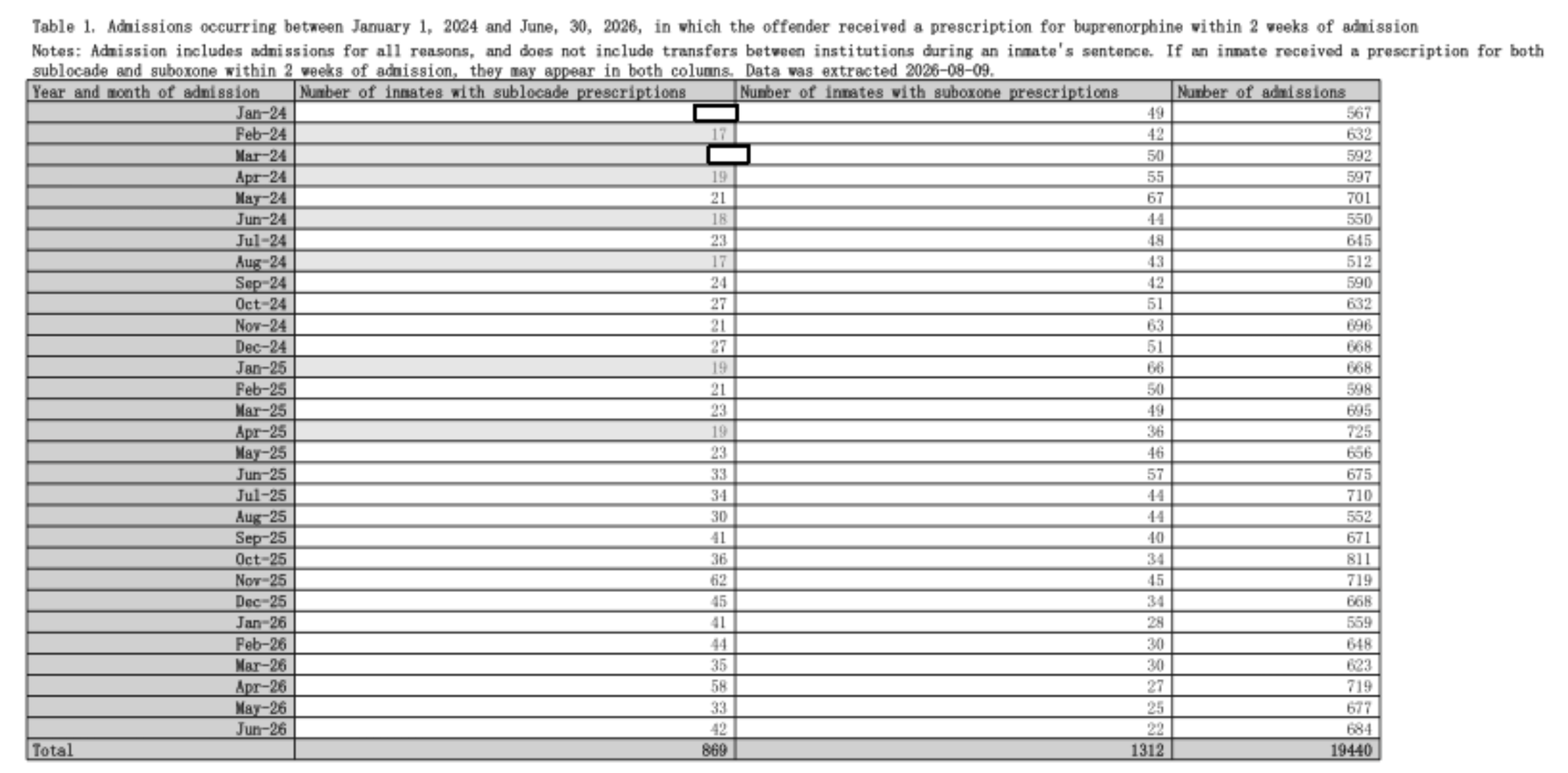
Additional data obtained by Drug Data Decoded through freedom of information show that over the same period that prescribing of Sublocade increased 161 percent in Alberta jails, it declined slightly in federal prisons. The federal prescribing increased from roughly 20 to 40 individuals per month from 2025 to 2026 — a much smaller overall increase than Alberta.
The Ontario government was also asked for its remand prescribing data, but refused to complete the request, claiming it "does not track prescriptions at intake separately from medications prescribed through an inmate/patient’s full period of incarceration."
Over the last year, experts have demanded Correctional Services Canada reverse new policies stripping patients of their right to access medications to manage opioid dependence, ADHD, depression, and anxiety. So far, CSC has not backed off its policy direction, citing diversion of drugs from intended recipients as the driving concern.
Peddie agrees that drug diversion is common in jails and even drove his initial exposure to opioids. He says diversion "makes a dangerous place more dangerous, more violent, creating a black market and huge debt that you can't run from." He remembers paying up to $100 in jail for a diverted dose of Suboxone. "Considering you basically work full time for $27 every two weeks... yeah, you build up debt pretty fast. Especially if you come across as a soft target."
All the same, Peddie firmly believes "a drug-free prison will never exist." To him, the only safe way forward is "humanizing inmates and allowing them to be honest without worry or fear of punishment or being taken off the medication they need, which leads to unsafe treatment."
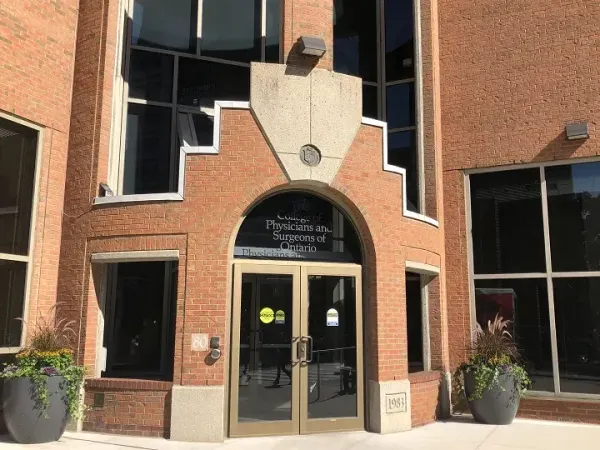
Suboxone pills cost the health system around a dollar per dose, underscoring the artificial financial burden on people forced to access diverted markets. Diversion of hydromorphone from safe supply programs was the driving force behind a recent policy passed by the College of Physicians and Surgeons of Ontario to ban take-home prescribing for safe supply clients. (Hydromorphone is a full opioid agonist that costs 35 cents per dose.) The Ontario College was challenged by an eleventh-hour lawsuit filed on November 13 by people directly affected by the ban alongside Toronto Overdose Prevention Society. In response, the College paused its moratorium.
In line with its prison policy, Alberta has led other provinces against safe supply access, bringing its campaign into the national spotlight during a 2024 federal parliamentary committee recently revisited by Drug Data Decoded. Alberta has also led provincial governments on legislating forced medication of people whose drug use could cause "harm to themselves or others." Such people will be identified by politically appointed officials under the Compassionate Intervention Act.
Sublocade is well positioned for this convergent moment of narrowing medications and widening carceral reach, as the drug's case is buttressed through academic publishing by pharmaceutical-sponsored physicians.
Travis Peddie says the way forward is "humanizing inmates and allowing them to be honest, without worry or fear of punishment or being taken off the medication they need, which leads to unsafe treatment."
A glowing study by sponsored doctors and shareholders
After a study on Sublocade was published by Indivior-linked Ontario physicians and Indivior employees, the timely media response was overwhelmingly uncritical.
"If people are on methadone or Suboxone, you can still overdose. Whereas if you’re on Sublocade, you don’t overdose,” the study's lead author, Dr. Ken Lee, told CTV. "It's very gratifying to see this, and we're very happy to spread the word," he said to CBC News. “There’s a substantial overdose protection when you’re on Sublocade versus being on methadone or Suboxone or some of the other replacement treatments,” he told London Free Press. "It's the first good news we've had in years," Radio-Canada published in French from a CBC interview with Lee.
Each media outlet failed to report that the study and its authors were funded by Indivior, the pharmaceutical giant holding the patent to Sublocade.
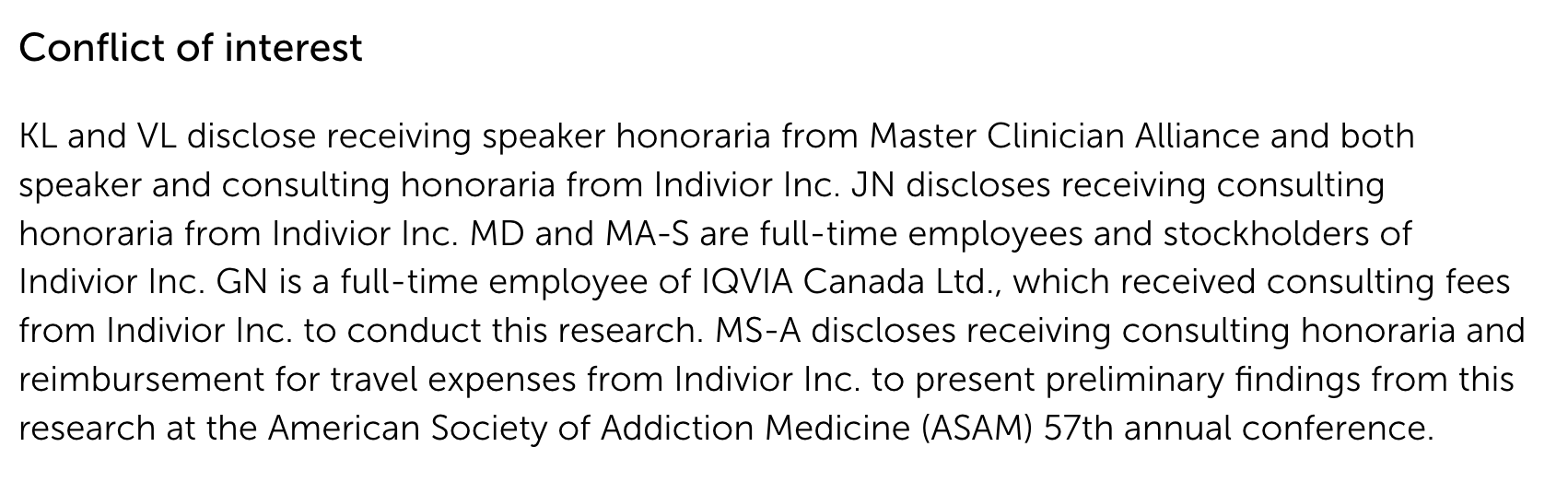
Every author on the study disclosed conflicts of interest with Indivior, including speaking fees from Indivior to first and second authors Lee and Dr. Vincent Lam, a decorated book author. (Lam's most recent book was about treating substance use disorder.) Indivior also paid consulting honoraria to study authors Lee, Lam, Dr. Jennifer Nicolle, who practices at Coderix Medical Clinic in Toronto where Lam is the medical director, and Dr. Melissa Snider-Alder. Pharmacists Dr. Maher Abdel-Sattar and Dr. Martine Drolet are employees and shareholders of Indivior. The seventh author is Dr. Ginnie Ng at IQVIA, a consultancy paid by Indivior to run the study.
Given each author took undisclosed amounts for speaking, consulting, or direct employment from Indivior, the study merits little examination. Briefly, the authors used health system data to compare overdoses among patients prescribed Sublocade, Suboxone, oral morphine, and methadone for opioid use disorder. They concluded that, because "individuals receiving [Sublocade] and [Suboxone] were significantly less likely to experience non-fatal and fatal ODs compared with those not receiving OAT," the study therefore supports the "effectiveness of buprenorphine-based therapies in reducing odds of overdose."
This is a dangerous oversimplification dissected in Crackdown's 2022 investigation, "Cop Baked In." It described the ways that people self-select for these medications: those who can manage without full agonist activity can thrive on buprenorphine, while others suffer immensely. Sometimes, an individual's tolerance and preference for a drug changes over time. To avoid dangerous and painful outcomes, Crackdown concluded, people need options and informed consent.
As Grover sees it, "buprenorphine does not fit receptors the same way methadone or [morphine] do... Some people, when they're on buprenorphine, no matter how long they've been on it for, their bodies will still feel withdrawal, will still feel discomfort, and it won't be effective. Buprenorphine does not work for everybody."
The sudden burst of media coverage on the Sublocade study occurred a week before the 'research' is to be presented at the Canadian Society of Addiction Medicine conference in Calgary November 19 to 21.
The continued appearance of financially motivated drug policy research in the academic literature reflects a crisis in publishing. Last March, Alberta government staff published a study on the closure of the province's supervised consumption sites, which the government press release claimed showed only benefited its former site users.
A group of respected researchers have upended that study's methodology, conclusions, and failure of transparency in a scathing academic critique. News media have failed to notice.
The Alberta study failed to disclose seemingly countless conflicts of interest among its authors, including Rob Tanguay – a coauthor of the prison prescribing memo discussed at the top. Addiction Journal continues to refuse calls for retraction, and has appeared to undertake a campaign of controlled opposition, publishing just one relatively benign rebuttal to the 'study' and a response from the authors.
Fitting the pattern, in 2018 Tanguay coauthored a review article of cannabis products that sketched a path to the products' legal regulation. Although the study held that “the authors report no conflicts of interest,” an erratum published months later revealed Tanguay had taken payments from a cannabis company and nine other pharmaceutical manufacturers, including Indivior and Purdue. It added a further conflict involving his conference-organizing company, RLT Conferences.
An Alberta Health Services disclosure statement from early 2019 showed that Tanguay took "unrestricted conference sponsorships" from the cannabis company, Indivior, Purdue, and several others.
Despite the documented harms of involuntary 'treatment,' Tanguay's 2023 review examining studies on its outcomes emphasized a "lack of high-quality evidence to support or refute involuntary treatment." He was named senior medical director of Alberta's involuntary treatment system in 2025.
Asked if the situation playing out in Alberta seems like experimentation on the prison population, Grover responds, "The current level of care... is not supported by current medical guidelines or evidence. Whenever we see a vulnerable population coercively being subjected to treatments that are untested and for which there is not a clear evidence base, that is certainly a concern."
Grover says that she and other community-based providers "are not informed, typically, when a patient has their medication changed when they're in remand," which raises "significant concerns" about continuity of care. "To do all of this work with a patient, and then to know that that patient is going to experience harm, is extremely morally distressing. They may come off of medications that they are stable on. They may experience severe withdrawal or precipitated withdrawal – certainly, we've seen several cases like that."
"And they may choose to never access opioid agonist treatments again, or access health care again."
While continuity of care is clearly not a priority in Alberta's carceral context, Recovery Alberta explains the medical black hole absorbing prisoners: "Correctional Health Services professionals do not share patient health information with anyone outside of the care team."
All of this plays out as Alberta makes its final preparations for involuntary treatment of the general population. The cheerleading of Sublocade by compromised medical advocates obscures the fact that forcibly medicating people with an opioid blocker risks driving new demand for drugs that circumvent the medication. Nitazenes (and to a lesser degree, cyclorphine) are synthetic opioids in circulation with high binding affinity to opioid receptors, able to dislodge buprenorphine. They are already in circulation. So far, official deaths involving nitazenes have remained low in Canada, but because they are not always included in post-mortem toxicology, their real impacts could be much greater. Other countries have experienced and reported on these.
Grover says that as the drug supply changes, medications need to keep up. Instead, patient care is becoming "a little bit more rote – everyone gets the same dose, everyone gets the same plan. And that, unfortunately, does not work."
For Peddie, the driving motive behind prison policy is more nefarious. "They use the prison walls to cover it up, but they create this desperation inside," he says, adding that "a harm reduction approach works inside prison walls as well – separating security and medical care."
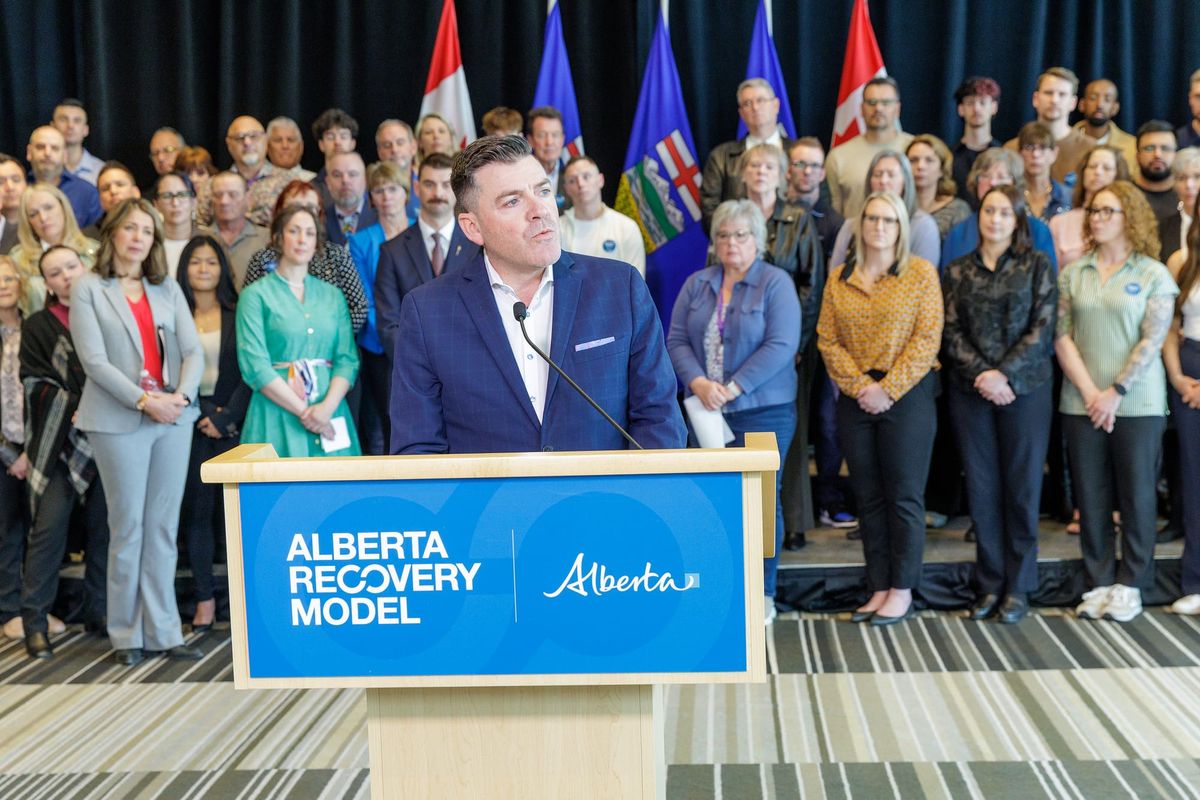
With security and medical care increasingly conjoined by the profit-hungry Alberta Recovery Model, people on the outside will need to listen to survivors from the inside, or else watch an evolving corporate coup devour their systems of health and security.
Documents used in this story:
An early version of this story was shared with Paid subscribers on November 17.
Thanks to Paid subscribers for making this work possible.
Drug Data Decoded provides analysis using news sources, publicly available data sets and freedom of information submissions, from which the author draws reasonable opinions. The author is not a journalist.
This content is not available for AI training. All rights reserved.