BREAKING: Alberta government to announce Calgary and Lethbridge supervised consumption site closures
Nine days after it announced a fraudulent study published by its staff, the Alberta government is moving quickly to dismantle what remains of supervised consumption services in the province.


Drug Data Decoded has learned that the Government of Alberta is planning to follow through on its plans to close the supervised consumption services in Calgary and Lethbridge, with an announcement planned for March 20.
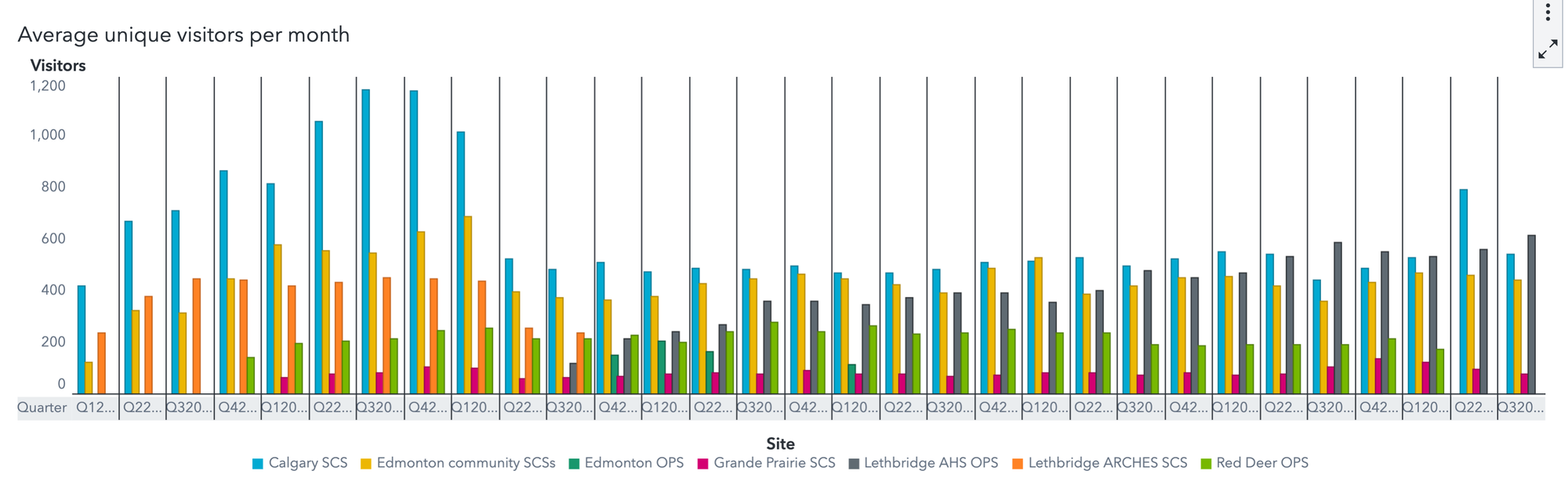
The two sites have stood as the busiest in the province for the last decade, together servicing 700 to 1,500 unique visitors every month since 2019.
Three attempts to close the Calgary site have been made over the years. The first was in 2021, when then-premier Jason Kenney announced its impending closure. Public backlash brought that to a standstill, as a unified front of residents, businesses, researchers and frontline workers demanded additional replacement sites before the city's only site could be closed.
The second attempt, in fall 2024, was tucked into city council manoeuvring. It failed when councillor Dan McLean had his motion inverted by city council. A repeat was then attempted in January 2026 by city councillor Landon Johnston. These attempts closely followed the playbook successfully carried out in Red Deer, in which city councillors and the Province appeared to collude in advancing a council motion asking the government to close the site.
It appears that Lethbridge is also following that playbook, with a city council motion passed in December asking the Province to close its site. The fact that Calgary's city council has not endorsed the closure of the site does not appear to be part of the provincial government's consideration, however.
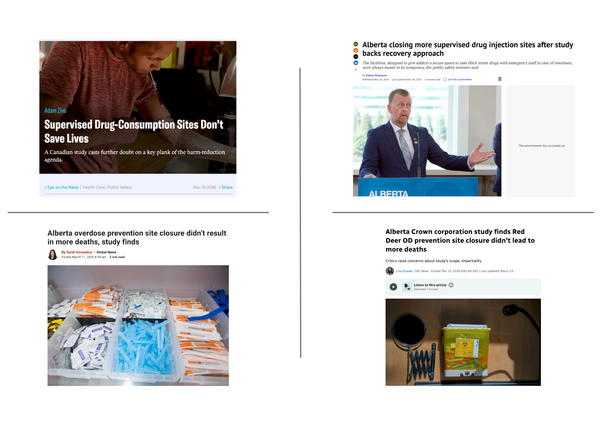
These announcements follow the publication of a study demonstrated to have been published under false pretenses in a March 11 story by Drug Data Decoded. Researchers and frontline workers, including a Red Deer emergency physician and the local fire chief, have decried the study since then, and several people have indicated to Drug Data Decoded that retraction requests have been submitted to the journal that published it, Addiction.
 Dr. Thara Kumar
Despite its methodological problems and undisclosed conflicts of interest, the study has had considerable fallout since its publication. On March 16, Ontario premier Doug Ford revealed that his government would be closing its remaining supervised consumption sites on the basis of the study's findings. On March 18, Manitoba premier Wab Kinew walked back his recently stated intention to fast-track a planned supervised consumption site in Winnipeg.
In Saskatchewan, Conservative MP Brad Redekopp sprung into action after the study's publication to demand the sites in his province, which have never received provincial funding, have their federal licenses revoked. According to researchers who attended the event, and spoke to Drug Data Decoded on condition of anonymity, Redekopp misrepresented the voices of people who attended a town hall on the site in February, claiming that many people in attendance opposed the site. In reality, it appears that most people there spoke in favour, and Redekopp simply cherry-picked a few statements favourable to his position.
Regardless, the stated findings of the Alberta government 'study' do not even match the findings that the authors themselves published. These statements also fly in the face of decades of research demonstrating the effectiveness of supervised consumption sites in reducing overdoses, deaths, hospitalizations, and other health outcomes. The sites were also recently shown to have neutral or even beneficial effects on neighbourhood crime levels.
As their government continues to follow private interests on policy, people in Alberta will once again need to find ways to make their voices heard over the roar of propaganda.
To that end, an open letter is now circulating to refute the Province's closure of sites. Anyone can view and sign here.
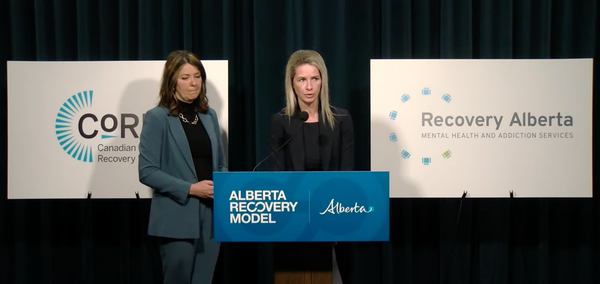
The Alberta government announcement is planned for 12:30PM MST on March 20 and can be viewed live here. The government says the news will be delivered by Minister of Public Safety and Emergency Services Mike Ellis and Minister of Mental Health and Addiction Rick Wilson.
An early version of this story was shared with Paid subscribers on March 11.
Drug Data Decoded provides analysis using news sources, publicly available data sets and freedom of information submissions, from which the author draws reasonable opinions. The author is not a journalist.
This content is not available for AI training. All rights reserved.