Alberta government hiding additional drug jail plans
Newly obtained documents reveal a hidden plan to build a drug jail in Grande Prairie, raising questions about how many additional facilities are in the works.

Update (March 27, 2026): The government responded to a follow-up freedom of information request, denying that additional facilities are in planning or under construction. See bottom of story for details.
In February 2025, the Alberta government revealed in a budget announcement that it would build two 150-bed facilities for long-term detainment, forced withdrawal and forced medication of people who use drugs. These would be located in Calgary and Edmonton, but their locations were not publicly disclosed.
In September 2025, Drug Data Decoded reported the locations of these facilities – in existing carceral districts of the two cities that include the Alberta Hospital in northeast Edmonton and near the Calgary Correctional Centre in the city's northwest.
 Euan Thomson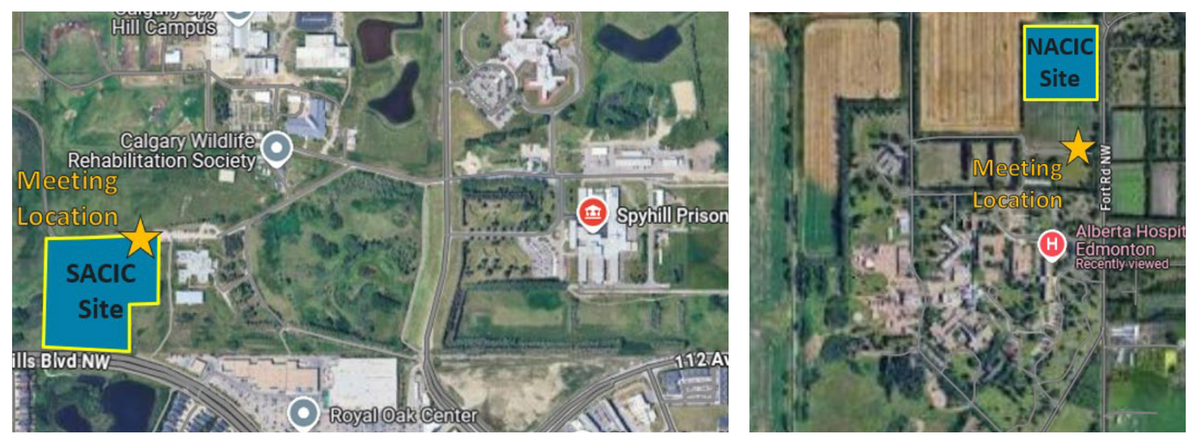
However, new documents reveal at least one additional facility the government has kept under wraps.
Meeting minutes in a freedom of information request obtained by Drug Data Decoded show senior officials discussing three drug jails. Two 150-bed facilities are listed, presumably referencing the Calgary and Edmonton facilities, but a third is also included: a facility with "30 beds in Grande Prairie." This is the first known mention of a drug jail planned in Grande Prairie.
![Compassionate intervention (Steve). We need to get to the working group. We will ensure the SOOs and ED's are updated on Wednesday. Then we can begin to engage others. We need to position this long term. MHA is going to release money on a one year term. Steve and Tom to discussion [sic] how to operationalize this money. By next week will try to pull project details, (costing) and a working group together. Adult beds: 150×2+30 beds in Grande Prairie. Action [in red lettering]: Tux, Jen, and Cheryl to meet and unify the information. Cheryl to connect with Finance for formulas of costing.](https://storage.ghost.io/c/10/73/1073f4ce-291a-47c3-b08b-3e76ed9e0e73/content/images/2026/02/Screenshot-2026-02-09-at-1.21.58---PM.png)
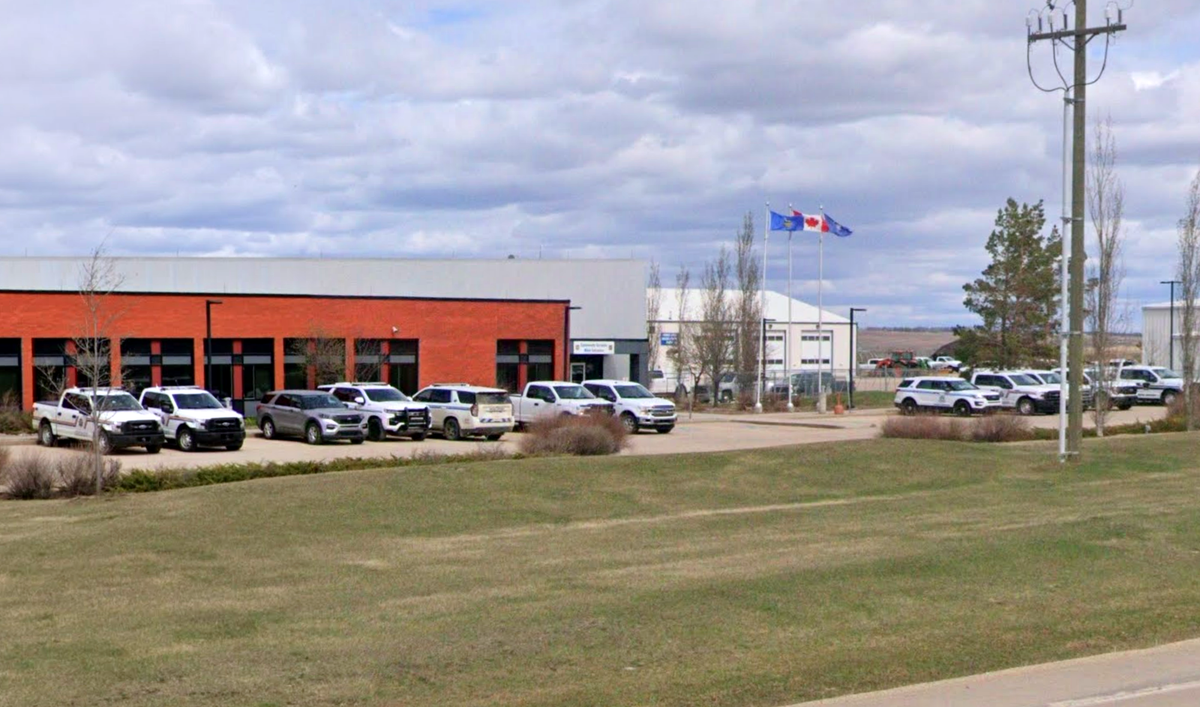
The City of Grande Prairie permitting office was contacted for information about this facility, and provided information about a previously disclosed 50-bed recovery community that is slated to open in 2027, located in County of Grande Prairie near the RCMP detachment. It is unclear if the 30 beds described by Recovery Alberta officials are to make up a portion of the Recovery Community, or if a separate facility is under construction to house the 'secure care' component.
The County of Grande Prairie was reached for further information, but was unable to provide further details. The Ministry of Mental Health and Addiction and Steven Clelland, who was responsible for "operationalizing" ministry dollars for drug jails within Alberta Health Services, were also sent questions early on February 9. Neither responded.
Under 'secure care,' prisoners under a Compassionate Intervention treatment order can be detained indefinitely through extensions. The legislation strips its prisoners of the right to refuse medication, such as opioid agonist treatments, contravening the principle of informed consent on which medical care is built.
Ever since plans for the CIA were uncovered in 2023, government officials have been careful to emphasize that 'secure care' beds would not make up a large proportion of the total system capacity. Faced with the public backlash, Premier Danielle Smith described the proposed legislation as a “last resort” and that her government wanted to try “every other option first.” One month before those statements, Smith's government had terminated all safer supply programming and was in the process of coordinating the closure of Red Deer's only overdose prevention site.
However, the CIA is replacing the 2006 Protection of Children Abusing Drugs Act (PChAD), which previously oversaw the violent detainment and forced withdrawal of roughly 450 children every year, with some children detained multiple times per year for up to ten days. Drug Data Decoded has reported that survival outcomes have never been measured in PChAD.
 Euan Thomson
The CIA is extending the basic framework of PChAD to adults, while extending the duration of detainment to months or even years. This means 300 adult beds is an unlikely final tally for the scale of detainment planned by the Alberta government.
In a presentation hosted by the University of Calgary in 2024, the senior medical director overseeing Compassionate Intervention in Recovery Alberta, Robert Tanguay, asserted that the program was "not about detoxing people in jail" and that the government was "not going to be detoxing people in work camps," presumably a reference to allegations of forced labour at treatment centres in British Columbia as recently as last year.
Allegations of forcing labour on treatment centre clients were also made concerning Premier Smith's former chief of staff, Marshall Smith, during his time overseeing Baldy Hughes Therapeutic Community in Prince George, BC. He has denied those allegations.
The existence of plans to open a 'secure care' facility in Grande Prairie raises questions about how many such facilities are to be built across Alberta – and how many 'beds' they will contain. Anyone with information about these facilities is encouraged to approach Drug Data Decoded or other media to ensure that the public is fully informed on its government's carceral – and increasingly privatized – drug policy agenda.
Update (March 27, 2026): The Alberta government responded to a follow-up freedom of information request asking for "records of proposed or planned Compassionate Intervention Facilities, including both secure care facilities and non-secure facilities held by the Ministry, including Deputy Minister Evan Romanow or any other member of the Ministry. Provide addresses, bed capacity, nature of the facilities (secure or non-secure), and expected opening dates, if known, for all proposed locations. Include any contracts or procurement process documents related to the proposed Grande Prairie facility." The government refused access on the basis of 'publicly available documents,' none of which indicate that a facility is planned in Grande Prairie.
However, reporting by Brett McKay for The Canadian Press reveals that ten acute care beds in the Grande Prairie hospital are being converted to secure Compassionate Intervention beds. This is part of a 100-bed provincial conversion of acute care beds.
Documents used in this story: See "How Recovery Alberta facilitated consumption site closures" Part 1 and Part 2 for documents showing conversations about a proposed Grande Prairie secure care facility.
Drug Data Decoded provides analysis using news sources, publicly available data sets and freedom of information submissions, from which the author draws reasonable opinions. The author is not a journalist.
This content is not available for AI training. All rights reserved.